Green Hydrogen Production Pilot Targets Rural Cooking in Tanzania
A community-scale green hydrogen pilot in Tanzania is testing on-site renewable hydrogen for rural cooking, assessing technical, economic and safety performance to inform the National Clean Cooking Strategy.
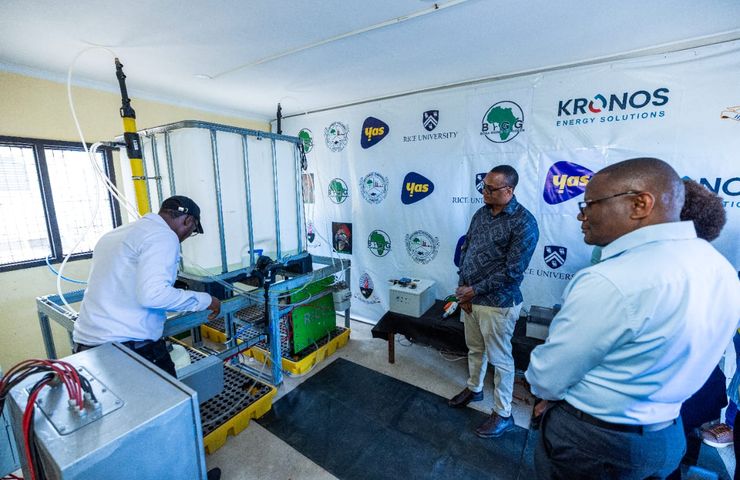
A community-scale green hydrogen production pilot is currently underway in Kilwa District, Lindi Region, exploring the potential of hydrogen as a clean cooking fuel for local households. This initiative, steered by the local group Bora Women Go Green and directed by Dr. Bora Haule, is gearing up to transition into formal production by the end of the year. With technical and policy guidance from the Ministry of Energy’s Directorate of Clean Cooking Energy, the project aims to determine whether hydrogen produced through renewable-powered electrolysis can meet the necessary safety, cost, and operational standards for a low-income, off-grid environment.
During a recent visit to the site, Nolasco Mlay, the Director of Clean Cooking Energy, along with Yusuph Mwinyi, Kilwa District’s Administrative Secretary, highlighted the importance of strict safety protocols, clear regulations, and active community engagement. Their involvement emphasizes how Tanzania’s National Clean Cooking Strategy 2024–2034 is integrating hydrogen alongside LPG, improved biomass stoves, biogas, and electric cooking in a cohesive policy aim.
Key Insights
- The pilot employs a compact alkaline or PEM electrolyser to split water into hydrogen and oxygen using either solar power or grid electricity.
- Hydrogen is stored in certified cylinders that feature leak detection and pressure relief systems before it reaches dedicated burners.
- Officials will evaluate the cost of hydrogen against LPG, charcoal, and firewood, taking into account local income levels.
- Research from European labs has raised concerns about increased leakage and pollutants if hydrogen units aren’t properly optimized, signaling the need for testing in local settings.
- Results will shape regulations concerning hydrogen infrastructure, installation standards, and potential subsidy options.
- Local clinics will track improvements in indoor air quality and health effects over time.
Historical Energy Use in Lindi Region
The economy in Lindi Region relies heavily on small-scale farming—think cashews, sesame, and coconuts—as well as fishing. Due to limited industrial infrastructure and low average incomes, electricity access remains one of the lowest in Tanzania. Because of this, biomass has become the go-to cooking fuel, which not only leads to deforestation but also contributes to black carbon emissions. Moreover, indoor air pollution from wood smoke poses significant health risks, particularly affecting women and children responsible for cooking. All these factors highlight the urgent need to diversify fuel options that cater to rural settings without overly relying on grid connections or imported fuels.
Technical Configuration
The heart of this installation is an electrolyser designed for a community of around ten households. A basic water treatment system works to eliminate impurities that could damage the electrodes, and the storage tanks are carefully engineered for safe hydrogen containment. Specially designed cooking stoves help manage flame stability and minimize the risk of flashback, which is essential given hydrogen's broad flammability range. Local technicians have received hands-on training covering operation, maintenance, and emergency response.
With low electrification rates in Lindi, the pilot merges the unreliable grid supply with a dedicated solar PV array to ensure a consistent electricity input. Excess renewable energy during quieter periods is rerouted for electrolysis, boosting system efficiency and maximizing green hydrogen output.
Policy and Market Context
Tanzania has set ambitious goals in its National Clean Cooking Strategy, aiming to increase access to modern cooking energy from below 10% today to 80% by 2034. Rural areas still rely heavily on biomass fuels, with a 2023 survey indicating that over 90% of households use firewood and charcoal. Although LPG expansion has improved access in urban settings, it remains costly and logistically challenging in remote regions like Kilwa.
This Kilwa initiative illustrates how policymakers are looking into hydrogen production methods as a valuable complement to existing options. Partners such as the Clean Cooking Alliance and the World Bank are monitoring performance and assessing funding possibilities for future expansions if the results align with specific criteria. By embedding the pilot within established government structures and collaborating with district authorities, the project aims to provide strong evidence for private and public investors considering diverse clean cooking solutions.
Economic and Safety Considerations
Cost competitiveness stands out as a major challenge for this project. Initial comparisons will evaluate the cost of hydrogen delivered at the burner against LPG prices while factoring in the time and labor involved in biomass harvesting. Despite the high initial investment in electrolysers, storage vessels, and solar setups, local production reduces transport expenses and lessens reliance on volatile fuel markets.
Ensuring safety is equally vital. Given hydrogen’s low ignition energy and fast dispersion, it demands precisely engineered fittings, adequate ventilation strategies, and regular safety inspections. The pilot team is diligently tracking performance data, incident reports, and user feedback to continuously improve appliance designs and operational practices.
Community Engagement and Capacity Building
Bora Women Go Green is committed to fostering local ownership by actively involving women in training sessions, safety drills, and system management. Community meetings are held to clarify how hydrogen storage works differently from traditional fuelwood or charcoal, reassuring residents that hydrogen, when properly vented, poses no greater risk than LPG. The initiative also focuses on building a network of local technicians through mentoring and peer-to-peer training, aiming for knowledge transfer and sustainable practices in the long run.
Regional and Global Perspective
On a global scale, the debate surrounding hydrogen's role in residential energy is heating up. Lab tests in Europe have raised alarms over risks associated with blending hydrogen into existing gas networks, driving interest in innovations at the appliance level. The Kilwa project stands apart from grid-dependent models by concentrating on small-scale, off-grid electrolysis tailored to the realities faced by rural communities.
Africa’s transition to renewable energy increasingly showcases decentralized systems. If Kilwa’s approach is successful, it could serve as a roadmap for integrating green hydrogen production with agro-processing, small-scale industries, or off-grid energy services—thereby bolstering energy resilience in areas where expanding the grid isn’t financially feasible.
Next Steps and Outlook
In the coming months, the team will be monitoring several key metrics: hydrogen output volumes, monthly usage per household, maintenance records, and reliability feedback. User surveys will dig into how accepted the system is, how easy it is to use, and whether people are willing to pay for it. The district council is considering information campaigns—like radio ads and leaflets—to communicate lessons learned and raise awareness beyond the pilot area. As preliminary results emerge, they'll be shared with development partners to explore scaling opportunities or alternative technologies.
Ultimately, the Kilwa green hydrogen pilot aims to assess whether renewable hydrogen can carve out a valid niche in Tanzania’s clean cooking landscape. By collecting localized data on hydrogen project financing, safety performance, and user engagement, it hopes to shape regulatory frameworks, support subsidy programs, and inform future investment decisions. Its success—or potential limitations—could resonate widely with any community in search of zero-emission cooking solutions, particularly in emerging economies.