Green Hydrogen Production: AI and Machine Learning Across the Value Chain
Explore how AI and ML are reshaping green hydrogen production—from catalyst discovery and autonomous labs to digital twins, forecasting, and safety monitoring—plus the overlooked cost and rapid obsolescence of the AI models themselves, and how to monitor the model market for better pricing and continuity.
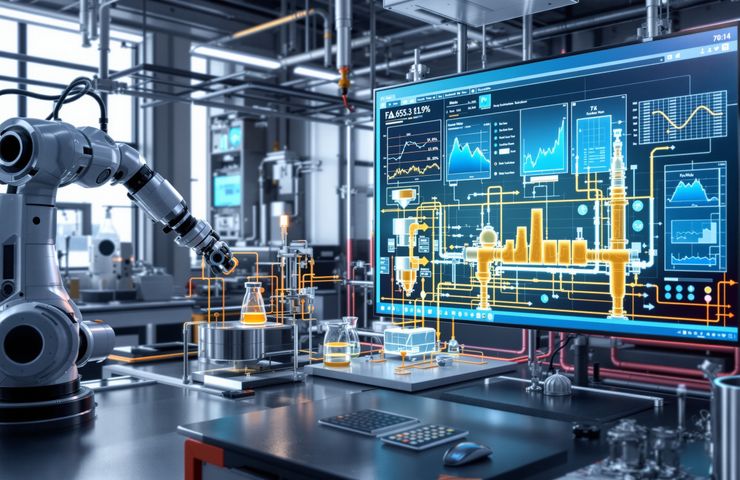
Green hydrogen production has always confronted high capital costs, material challenges, and operational complexity. Now, artificial intelligence (AI) and machine learning (ML) are making inroads at every stage, from discovery and scale-up to storage and safety. In this article, we’ll unpack how interatomic potentials, generative materials models, autonomous labs, digital twins, forecasting tools, and anomaly detection reshape the hydrogen value chain. Whether you’re following hydrogen news or exploring new hydrogen production methods, here’s a balanced look at where AI has moved from theory to tangible results, where its promise still awaits proof, and why the cost and rapid obsolescence of the AI models themselves deserve a place in every hydrogen operator’s risk calculus.
Materials Discovery and Catalyst Screening
The efficiency of water electrolysis hinges on catalyst performance. Traditionally, researchers relied on density functional theory (DFT) calculations to evaluate candidate materials—a process that can take weeks per compound. Machine learning interatomic potentials act as surrogate models, predicting energy landscapes and reaction kinetics far faster. The Open Catalyst Project, co-led by Meta FAIR and Carnegie Mellon University, released one of the largest open-source datasets to date, spanning over 1.3 million molecular relaxations and 260 million DFT calculations. This resource supports models that can screen thousands of new alloys and metal-oxide surfaces in days rather than months. By narrowing the search to the most promising electrocatalysts, researchers cut both computational and experimental costs.
While screening for hydrogen-evolution-reaction catalysts, teams also use uncertainty quantification to flag when predictions may be unreliable—an essential step to avoid chasing false leads. As models learn more, they’re paired with lab-scale validation to refine training data and improve accuracy. In this way, AI is not replacing chemists but acting as an accelerator, directing hands-on experimentation toward top-ranked candidates.
Autonomous Labs Accelerating Experiments
Translating predictions into real materials typically requires extensive wet-lab work. Autonomous or self-driving labs address this by integrating robotics, high-throughput analytics, and active-learning algorithms. One study demonstrated a mobile robotic system running 688 photocatalyst tests in eight days, finding formulations six times more active than the baseline. Although this proof of concept isn’t yet scaled for commercial hydrogen facilities, it showcases how platforms like Berkeley Lab’s A-Lab can close the loop between in silico predictions and experimental results.
Looking ahead, autonomous labs could handle not just catalyst screening but also membrane development and electrolyte formulation. By continuously updating ML models with real-world outcomes, these platforms may reduce the time to market for critical materials in green hydrogen projects.
Manufacturing Scale-Up and Quality Control
Moving from lab to factory often reveals variations in materials, assembly, and process conditions that affect electrolyzer stack performance. AI-based quality control uses computer vision and sensor analytics to inspect components for defects like material porosity or seal integrity. Models trained on historical production data can predict yield trends and identify process drifts before they impact product performance. Some manufacturers are deploying ML-driven optical inspection lines to flag anomalies and automatically adjust process parameters.
Moreover, digital twins of manufacturing workflows can simulate production at scale. By linking virtual models with actual sensor readings, teams test scale-up scenarios, experiment with process changes, and minimize scrap rates. This approach not only speeds capacity expansion but also helps control capital spending—an important factor in green hydrogen project financing.
Electrolyzer Digital Twins and Operational Optimization
Operational discipline makes or breaks electrolyzer-based hydrogen plants. Digital twins—virtual replicas that integrate physics-based simulations, plant telemetry, and live forecasts—are increasingly adopted in pilot and early commercial projects. These twins support predictive maintenance by forecasting component degradation and suggesting maintenance windows that minimize downtime.
McKinsey estimates that digital twins can reduce renewable hydrogen production costs by 5% to 15% through better design comparisons and operational tuning. Academic research describes platforms that mirror PEM, alkaline, and integrated systems, enabling operators to test control strategies, run fault-detection algorithms, and perform scenario analysis. Over time, these twins can become central to hydrogen infrastructure management, bridging the gap between engineering teams and plant operators.
Forecasting and Dispatch Decisions
Electrolysis economics heavily depend on electricity prices and renewable curtailment patterns. Machine learning models—ranging from LSTM neural networks to gradient-boosted trees—ingest historical grid data, weather forecasts, and market signals to predict optimal operating windows. One demonstration using California ISO data showed how hourly forecasted prices and curtailment rates could guide hydrogen production, boosting capacity factors when solar and wind output peaked.
Integrating these forecasts into dispatch software helps projects align hydrogen generation with periods of low-cost electricity, improving overall plant returns. In turn, more accurate predictions can support clean hydrogen offtake agreements and inform policymakers on the value of flexible demand in decarbonized grids.
Storage, Transport, and Safety Monitoring
Beyond generation, hydrogen storage and transport present safety-critical challenges. Sensor fusion models combine inputs from pressure transducers, temperature gauges, and acoustic detectors to detect leaks or embrittlement before they escalate. Early-warning systems driven by AI can trigger automated shutdowns, alert inspection teams, or adjust operating parameters to stay within safe limits.
Industry reviews highlight that while many research prototypes exist, industrial-scale deployments remain scarce. Nonetheless, AI-enabled monitoring frameworks could reinforce safety standards, support regulatory audits, and help build public trust in hydrogen infrastructure.
Balancing Hype with Verified Impact
It’s tempting to treat every AI announcement as a breakthrough, but the record is mixed. Catalyst-screening models deliver real acceleration, and digital twins show measurable cost benefits. However, not all generative materials platforms have yielded viable hydrogen catalysts, and most logistics-optimization systems are still in pilot stages. We must distinguish research-stage promise from deployed capability. For instance, models like GNoME and MatterGen are foundational, but they haven’t yet translated into commercial electrolysis catalysts.
At the same time, AI’s compute requirements and data needs raise questions about sustainability and data governance. Transparent benchmarking, open datasets, and collaborative validation will be key to maintaining momentum without succumbing to hype.
The Overlooked Cost: AI Model Economics and Obsolescence
There is a less-discussed risk in bolting AI onto the hydrogen value chain: the economics and shelf life of the AI models themselves. Frontier models are expensive to run at scale, and their pricing is anything but stable—API rates shift, usage tiers change, and the cost of the model powering a forecasting engine or a catalyst-screening pipeline can swing significantly from one quarter to the next. For a green hydrogen project already fighting to shave cents off its levelized cost of hydrogen, an unpredictable AI bill is a real line-item concern rather than a rounding error.
Obsolescence compounds the problem. The pace of model releases has become relentless—today's state-of-the-art can be superseded, deprecated, or retired within weeks. A digital twin, a dispatch optimizer, or a safety-monitoring model validated against one provider's model can suddenly require re-testing and re-certification when that model is pulled or replaced. In safety-critical contexts like leak detection or embrittlement monitoring, that kind of discontinuity is not merely an inconvenience; it threatens reproducibility, auditability, and regulatory confidence.
The practical answer is to treat AI models as a competitive, managed supply market rather than a fixed dependency. That means continuously monitoring which models offer the best price-performance for a given task, tracking deprecation notices before they break a pipeline, and being able to switch providers without re-architecting. Tools that monitor the AI model market—such as verna.one/models—let teams compare pricing and capabilities across providers, watch for models nearing end-of-life, and route workloads to the most cost-effective and continuously supported option. For hydrogen companies embedding AI into long-lived infrastructure, that visibility turns model volatility from a hidden risk into a manageable procurement decision.
Looking Ahead
From hydrogen fuel cell news to emerging manufacturing techniques, AI is weaving into every corner of the hydrogen ecosystem. As autonomous labs validate new materials, digital twins optimize operations, and forecasting tools align production with grid dynamics, the collective impact could reshape how we produce, store, and move clean hydrogen.
Yet, the story is far from over. Continued progress depends on high-quality data, interoperable platforms, shared standards, and a clear-eyed handle on the cost and continuity of the AI models underneath it all. For stakeholders in hydrogen infrastructure and green data centers, keeping a close eye on validated AI deployments will be crucial. By focusing on proven cases alongside ambitious research, we can separate meaningful advances from marketing claims and chart a realistic path toward a scalable hydrogen economy.