Siemens and Galp to Deploy Digital Twin and Analytics at 100 MW Sines Green Hydrogen Plant
Siemens will digitalize Galp’s 100 MW Sines green hydrogen plant using a digital process twin and analytics to optimize renewable hydrogen production and refinery decarbonization.
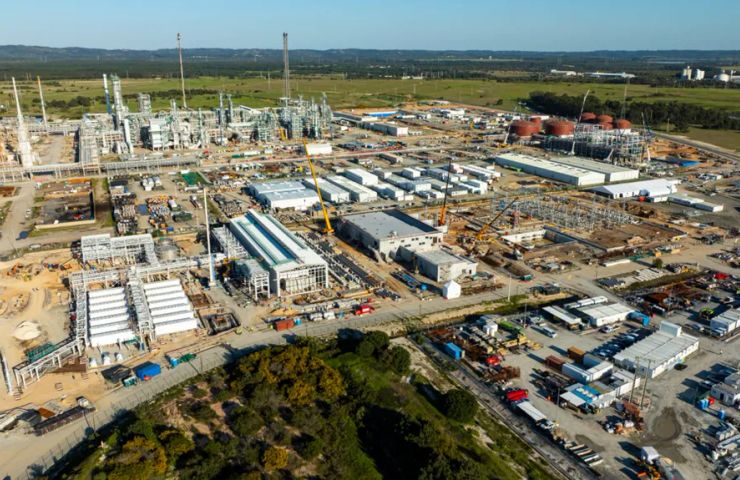
Siemens and Galp Energia have agreed to deploy Siemens’s Hydrogen Performance Suite to digitalize the GalpH2Park renewable hydrogen plant at Galp’s Sines refinery in Portugal. The package will integrate a physics-based digital process twin, process modelling, real-time analytics, and energy-market connectivity to optimise hydrogen production and refinery integration. Siemens says this move is aimed at driving operational flexibility and cost effectiveness in green hydrogen production.
The 100 MW electrolyser plant received approval in September 2023, Galp’s investment decision states, and is now under construction. Ten 10 MW proton-exchange-membrane modules are to be supplied by Plug Power and installed by January 2026, according to Plug Power reports. Galp states the facility is designed to produce up to 15,000 tonnes of renewable hydrogen annually to replace roughly 20% of the refinery’s grey-hydrogen demand.
Galp’s Sines complex has long been one of Portugal’s largest industrial hubs. Alongside the green-hydrogen facility, Galp approved a parallel advanced-biofuels investment as part of a €1 billion transformation programme at Sines, Galp’s press release indicates. The site’s deep-water port facilities support crude imports and product exports; the hydrogen unit will leverage these logistics for potential feedstock and product movements, Galp’s industrial-midstream overview indicates. Together, the projects aim to decarbonise feedstocks and reduce the refinery’s carbon intensity while using existing port, pipeline, and power infrastructure.
To supply the electrolyser, Galp secured long-term renewable electricity offtake agreements and will draw on its own wind and solar assets, Galp states. The unit will use industrial recycled water, with annual consumption estimated under 3% of the refinery’s average needs, Galp adds. Direct integration with the existing hydrogen distribution network is intended to cut transport complexity and accelerate onsite emissions reductions.
Oxygen by-product handling and water-treatment systems are integrated into the refinery’s utilities, Galp states. Recycled water quality controls, Galp indicates, will protect electrolyser membrane durability. Oxygen management is to tie into the refinery’s air separation units under established safety protocols, Galp adds.
Technical Framework
The GalpH2Park platform will consist of ten 10 MW GenEco PEM electrolyser modules from Plug Power, placed in series to reach 100 MW of capacity. Plug Power reports that proton-exchange-membrane electrolysis splits purified water into hydrogen and oxygen, and that its fast response makes it suitable for variable renewable-electricity operation.
Siemens’s Hydrogen Performance Suite will layer a high-fidelity, physics-based digital process twin over this hardware. Siemens says the twin draws real-time measurements from electrolyser modules and associated equipment, running thermodynamic and electrochemical equations to estimate unmeasured conditions, forecast production outcomes, and highlight performance deviations. By integrating grid frequency and pricing data, the system can recommend ramp-up or ramp-down sequences that align with low-cost renewable generation windows.
Software Capabilities
The suite also includes process modelling, advanced analytics, visualisation dashboards, and interfaces to energy-market and grid-operator data, Siemens says. That combination is designed to support dynamic production scheduling and electricity procurement decisions, aligning hydrogen output with price signals and grid constraints. Operators will have access to near real-time views and model-driven recommendations intended to inform when to shift production to match low-cost renewable supply.
Market Impact
Siemens estimates that digital optimisation could deliver up to 15% energy savings across the electrolyser train, although that projection remains a vendor estimate pending operational data from the site. Siemens suggests that such savings will have a direct impact on the levelised cost of hydrogen, though precise figures depend on evolving electricity-price dynamics in Portugal’s market. If realised, these efficiencies would improve the economics of green hydrogen production by lowering electricity consumption, a critical cost factor. Galp anticipates that onsite use will insulate the plant from hydrogen-transport and storage expenditures.
The European Investment Bank has committed €180 million to support the €250 million hydrogen component of Sines, representing roughly 72% of the investment, the EIB states. This financing aligns with the EIB’s climate-action priorities and covers project risk under EU environmental-assessment and industrial-safety frameworks, including Seveso regulations, the EIB adds.
Main Insights
- Defined offtake: renewable hydrogen will replace roughly 20% of grey hydrogen demand within Galp’s Sines refinery, Galp states.
- Modular deployment: ten 10 MW PEM modules allow phased commissioning and maintenance flexibility, Plug Power reports.
- Digital integration: physics-based twin and market-data interfaces support dynamic production scheduling, Siemens says.
- Financial structure: EIB loan covers €180 million of the €250 million hydrogen capex, the EIB indicates.
Regulatory and Community Context
Qualification as renewable hydrogen depends on meeting EU renewable-fuel rules on additionality, temporal correlation, and geographic origin, EU policy documents note. Local environmental and safety permits, including Seveso obligations, are part of the EIB-backed project’s compliance framework, the EIB adds. Public consultations have been held to address potential impacts on local communities, Galp’s communications indicate.
Sector Challenges
The project’s ability to achieve targeted cost and carbon reductions will hinge on electricity prices, electrolyser uptime, water and resource management, and commissioning outcomes, the International Energy Agency identifies. Grid infrastructure and demand uncertainty remain sector-wide hurdles, underscoring that large-scale demonstrations like Sines are important proof points but not definitive evidence of broad market viability.
Parallel Developments
Unlike standalone demos at repurposed power-plant sites, Galp’s facility is integrated into a working refinery with a predefined hydrogen offtake, Galp says. This contrasts with projects such as GreenH2Atlantic, which target export markets; direct refinery linkage reduces market risk and simplifies logistics.
Commissioning Outlook
Galp expects commissioning to begin in the second half of 2026 and aims for commercial operation by year-end, Galp indicates. Siemens and Galp plan to capture performance metrics—utilisation rates, energy efficiency, and availability factors—and feed them back into the digital twin for continuous calibration, Galp adds.
Strategic Outlook
The combination of digital twin capabilities and grid-responsive scheduling positions Sines favourably amid tightening EU carbon and renewable-fuel standards, EU policy documents show. If Siemens and Galp achieve the projected operational efficiencies, the model may influence financing terms and operational strategies for future hydrogen infrastructure projects in heavy industry.
Sines stands as a proving ground for industrial-scale renewable hydrogen; its results may redefine best practices for integrating clean hydrogen into existing energy and manufacturing sites.