Green hydrogen pilot plant opens in Durazno through UTEC–Udelar partnership
UTEC and Udelar this month inaugurated an academic green-hydrogen pilot plant in Durazno, reproducing key stages from water treatment and electrolysis to compression and fuel-cell testing, aiming to train specialists and support Uruguay’s clean-energy strategy.
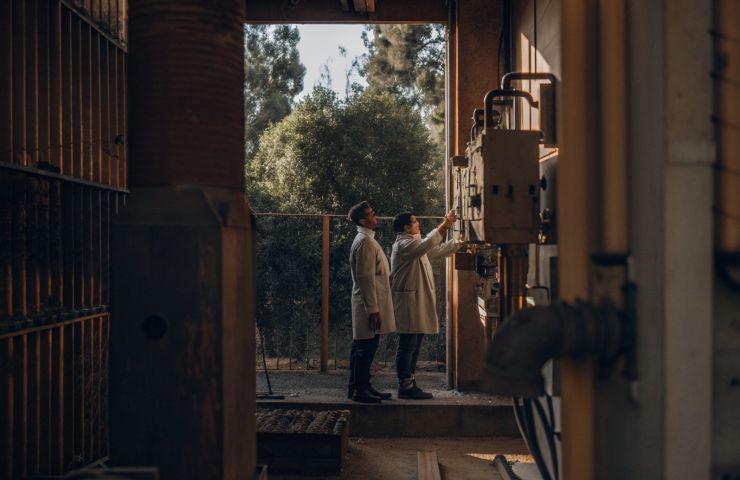
This month, UTEC and Udelar opened an academic pilot plant for green-hydrogen research and electromobility at the UTEC Durazno campus, according to Durazno Digital. ANII selected the project in 2024 through its Scientific Equipment Programme, reflecting Uruguay’s emphasis on public research infrastructure, according to Durazno Digital. The facility represents a practical step from policy to practice and aligns with Uruguay’s national Green Hydrogen and Derivatives Roadmap overseen by MIEM, which highlights pilot-scale projects and skills development as early priorities. Located near announced industrial projects in the country’s interior, the plant aims to support practical training, equipment operation and collaboration with public and private actors, as outlined by UTEC’s Green Hydrogen Research Group.
Simple but powerful chain for green hydrogen
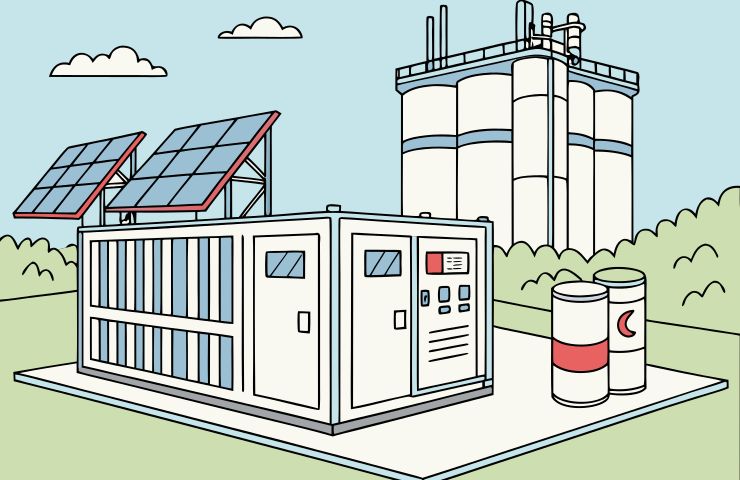
Purified water is fed into a 2.4 kW anion-exchange-membrane electrolyser to split water molecules using renewable electricity, according to Durazno Digital. From there the raw hydrogen stream passes through reverse-osmosis water treatment and gas-drying units before compression. A metal-hydride compressor capable of reaching pressures up to 200 bar is used at the site — a technology described by researchers as unique in Latin America, according to la diaria. After compression, hydrogen is stored in pressure vessels and can be reconverted into electricity using PEM fuel cells rated at 1 kW and 4 kW, accompanied by hydrogen-leak sensors and a SCADA monitoring and control system, as reported by local outlets. Sources differ on the reported hydrogen purity, with la diaria stating 99.9% and Durazno Digital reporting 99.999%, highlighting the need to verify technical documentation, according to local reports.
Collaboration and skills development
The initiative pools limited specialist capacity from both universities, allowing them to share expensive equipment, researchers and training resources, according to Durazno Digital. Rather than isolating individual processes, the pilot plant reproduces key stages of hydrogen production, storage and use in an integrated setting — tapping into local expertise at UTEC and Udelar’s Grupo Interdisciplinario de Ingeniería en Electroquímica. Researchers such as José Luis Pineda and Vitória Olave point to Uruguay’s shortage of personnel trained in electrolyser operation, compression maintenance and fuel-cell testing, underscoring the need to develop domestic capabilities, according to la diaria. For students and early-career technicians, that hands-on exposure is intended to shorten the learning curve for future, larger projects, according to Durazno Digital.
Made in Uruguay, made for Uruguay’s future
The plant embodies the “made in Uruguay, made for Uruguay’s future” ethos by decentralizing advanced research outside Montevideo and fostering regional development, according to UTEC. UTEC Durazno was selected because it hosts the Engineering in Renewable Energies programme, and its proximity to agricultural and livestock hubs can support future applications in rural settings. By situating the facility in Durazno, the universities aim to strengthen local higher education and catalyse technology transfer beyond the capital, as described by UTEC’s Renewable Energy Engineering programme. The Solar Laboratory of CENUR Litoral Norte also contributes expertise in converting solar power to electrolysis feed, connecting hydrogen research to local renewable-energy generation, according to Udelar.
Solving real-world problems and building capacity
La diaria reports the plant is intended primarily for research and teaching, not commercial-scale hydrogen production. With a design capacity of approximately 1 kg of hydrogen per day at 35 bar, the system offers a testbed for efficiency studies, purity measurement and system integration, according to Durazno Digital. Students and technicians can work with the full hydrogen chain — from water treatment and electrolysis to compression and fuel-cell conversion — gaining operational experience that directly addresses the technical challenges anticipated in larger projects. By engaging with the complete system, trainees can study safety protocols, leak detection strategies and SCADA-based process control, rather than focusing solely on component-level experiments, according to la diaria.
Positive environmental impact
Uruguay already sources over 97% of its electricity from renewable sources, according to MIEM, ensuring that hydrogen made at the Durazno plant can be truly low-carbon. Using renewable electricity to drive electrolysis could avoid the emissions associated with conventional hydrogen production from fossil fuels, as outlined in MIEM’s roadmap. The pilot’s small output means direct environmental benefits will be modest, but the data generated on water consumption, energy efficiency and gas purity can inform sustainable design for future installations, according to Udelar. Water demand remains modest relative to many industrial uses but still requires careful local assessment, according to Udelar.
Positive economic impact
Local reporting states the total investment was US$375,000, with US$300,000 provided by ANII’s Scientific Equipment Programme and US$75,000 from UTEC, according to Durazno Digital. Early economic impacts are expected through skills development, research services and technology-learning opportunities rather than hydrogen sales. The plant could enable consulting and system maintenance services, according to Udelar. MIEM’s national roadmap projects up to US$1.9 billion in annual turnover and more than 30,000 jobs by 2040, though those are long-term policy ambitions rather than outcomes of this pilot, according to MIEM.
Tapping into regional potential
Durazno’s central location on the Río Yí and its connection to national transport routes make it a strategic hub for future hydrogen activities, according to MIEM. The academic plant sits near the industrial H24U project in Pueblo Centenario, illustrating a growing ecosystem in the interior. In that context the pilot could help bridge academia and industry for local testing and staff training, according to Durazno Digital. MIEM’s roadmap identifies transport, industry and imported energy-intensive products as challenging decarbonisation targets, with pilot facilities like this helping to test applications before scaling, according to MIEM.
Looking ahead
Overall, the Durazno pilot plant represents a collaborative step toward solving real-world problems in green hydrogen production, storage and fuel-cell deployment. By training a new generation of technicians, engineers and researchers under local conditions, the initiative aims to reduce uncertainty and support Uruguay’s energy transition, right in step with the country’s strategy for decarbonizing hard-to-electrify sectors, according to Durazno Digital. The inauguration coincided with the II Jornada Académica de Hidrógeno Verde, when students and industry representatives toured the facility, according to Durazno Digital.