Spain Allocates €44M to eM Numancia Renewable Hydrogen and Methanol Project in Garray
Spain’s energy agency IDAE has reportedly committed €44 million to support the eM Numancia green hydrogen and methanol plant in Garray, pending final design confirmation.
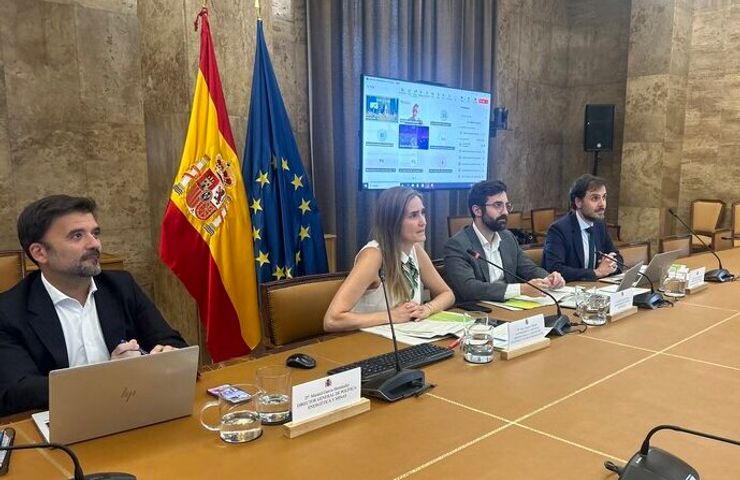
Spain’s IDAE has reportedly awarded around €44 million in public support to Elyse EM-Numancia SL for the planned eM Numancia renewable hydrogen and green methanol facility at the Soria Environmental Business Park in Garray, Castile and León. The project sits within national and EU schemes that aim to turn renewable electricity into low-carbon molecules for industry and shipping. While the funding decision highlights Spain’s drive to decarbonize, key details about project scope and technology remain unconfirmed, and conflicting reports on electrolyzer capacity underscore the need to verify the final engineering design before framing the project’s full potential.
Project Overview
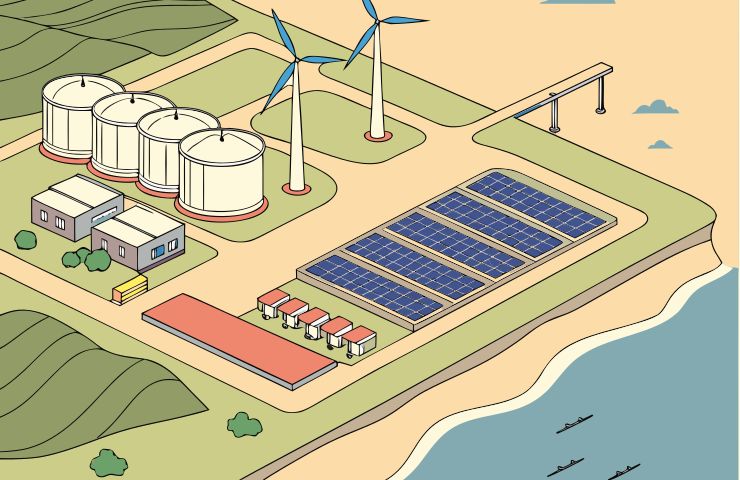
Under the eM Numancia banner, the facility would harness wind and solar power to drive a large-scale electrolysis unit, splitting water to produce what the EU classifies as renewable hydrogen under RFNBO rules. This green hydrogen would then feed a methanol synthesis plant, combining H₂ with captured biogenic carbon dioxide to yield green methanol. The initial press announcement cites anticipated annual production of over 6,300 tonnes of hydrogen and roughly 33,000 tonnes of methanol, volumes intended to serve Spain’s chemical, timber processing and logistics sectors. Yet, these output figures, drawn from secondary reporting, still await confirmation in the detailed grant documents. The project company, Elyse EM-Numancia SL, is registered in Spain and linked to Elyse Energy, a French renewable fuels developer. Although the precise ownership structure and division of engineering responsibilities have not been disclosed, the local vehicle model aligns with Spain’s public-support regulations. Located within the PEMA environmental business park, the site benefits from industrial land availability, grid access and potential proximity to regional offtakers. For Garray, with fewer than 1,000 residents, eM Numancia represents a significant clean-energy deployment, contingent on detailed technical and commercial validation.
Funding and Support Mechanism
Catalyzing the project’s development is what sources describe as a production-linked support mechanism managed by the Instituto para la Diversificación y Ahorro de la Energía (IDAE), operating under Spain’s Ministry for the Ecological Transition (MITECO). Rather than an upfront capital grant, the award ties public funds to certified hydrogen deliveries at a reported rate of €0.69 per kilogram. This approach mirrors the European Hydrogen Bank Auctions-as-a-Service model delivered by the European Climate, Infrastructure and Environment Executive Agency (CINEA), which encourages projects to prove commercial viability by linking subsidy flows to actual production. The funding is drawn from Spain’s Recovery, Transformation and Resilience Plan, co-financed through the EU’s NextGenerationEU programme, and reflects a broader pivot toward performance-based clean-energy incentives. While approximate calculations cite a total envelope of €44 million, the precise breakdown between national and EU contributions, as well as any co-financing commitments from private partners, is yet to be verified in the official IDAE or CINEA award documents.
This model is designed to reduce the risk of idle assets by ensuring projects have clear revenue streams linked to performance, potentially improving bankability. Industry observers note that robust monitoring protocols and RFNBO certification processes will be critical to validate hydrogen volumes and safeguard public investment, but those specifics have not yet been released.
Technology and Capacity Discrepancies
The announcement identifies a 60-megawatt alkaline electrolyzer as the core production asset, consistent with technology choices in large-scale renewable hydrogen schemes. Alkaline systems use a potassium hydroxide solution to facilitate hydroxide-ion transport between electrodes, a mature approach known for relatively low capital costs. Yet, at least one independent source describes eM Numancia as a 2.5-megawatt pilot under the H2 Duero banner, reportedly employing H2B2 technology. Such a wide gap in capacity—twelvefold by one account—raises questions about project phasing, scale-up plans and the exact role of Elyse EM-Numancia SL versus other promoters. The conflicting information could reflect an earlier pilot phase followed by an expanded commercial design, but without access to the formal IDAE or CINEA award documents, the discrepancy remains unresolved. Key design elements, including water sourcing, intermittent power integration, and the identity of the carbon-capture system provider, also await publication. Until the engineering, procurement and construction contracts are disclosed, we can’t determine whether the final plant will match the larger capacity or rely on a smaller demonstration unit.
Strategic Context
Spain has emerged as a European leader in renewable hydrogen policy, underpinned by its national Hydrogen Roadmap, the PERTE for Renewable Energies, Renewable Hydrogen and Storage, and requirements under the EU’s Renewable Fuels of Non-Biological Origin (RFNBO) regulation. The decision to channel support into integrated green-molecule projects like eM Numancia reflects a strategic push to build domestic hydrogen supply chains rather than exporting raw electricity. Green methanol, in particular, is seen as a liquid carrier that can plug into existing chemical and maritime infrastructure. According to a McKinsey analysis, e-methanol could play a key role in sectors such as shipping, heavy industry and timber processing, where direct electrification is challenging. Earlier in 2025, Spain used the European Hydrogen Bank auction mechanism to select three large projects, allocating roughly €377 million across sites in Garray, Saceruela and Onda. Beyond industrial use, policymakers view green methanol as a potential marine fuel that could help align Spain’s large merchant fleet with impending decarbonization regulations. By situating projects near ports or logistics centres, the country hopes to reduce transport costs and foster new export streams. However, the ultimate impact will depend on clear offtake agreements, evolving shipping standards and competition from fossil-based methanol producers still enjoying lower costs.
Execution Risks and Uncertainties
Despite the policy momentum, the eM Numancia project faces familiar execution risks. Obtaining construction and environmental permits can take years in Spain’s decentralized administrative system, especially when water withdrawal licences and carbon-capture permits are involved. Grid-connection upgrades to handle a 60 MW electrolyzer—or even a smaller pilot—require coordination with the TSO and may trigger costly network reinforcement. Securing long-term offtake agreements, crucial for both hydrogen and methanol revenue, remains a major hurdle; without binding purchase commitments, the project could struggle to attract debt finance. Operational complexity also looms: matching intermittent wind and solar output with a chemical synthesis process demands sophisticated control systems, robust storage solutions and reliable backup arrangements. Spain’s dry climate raises questions about sustainable water supply, and the sourcing and transport of biogenic CO₂ add logistical layers. Meanwhile, investors will scrutinize lifecycle emissions assessments, RFNBO certification timelines and the track record of technology suppliers. In addition, volatility in electricity market prices can erode expected margins, and potential changes in subsidy rules or regulations could alter the economic forecast mid-construction. In a region with limited industrial training programmes, Garray may also need targeted skill development to operate and maintain advanced electrochemical equipment.
Potential Benefits and Challenges
If eM Numancia reaches full commercial operation at the larger scale, it could serve as a blueprint for similar inland facilities that turn Spain’s abundant renewable power into tradeable chemical commodities. The project could create both short-term construction jobs and longer-term specialist roles in electrolyzer operation, carbon capture, and methanol synthesis, bolstering local economic activity in Soria province. It may also encourage ancillary industries, from water treatment to logistics services, to establish regional bases. On the other hand, any overshoot in projected capacity or costs could lead to under-utilized assets or fiscal strain on subsidy budgets. Local environmental groups will expect transparent reporting on water footprints, noise levels, traffic flows and overall lifecycle emissions. And while green methanol offers clearer handling advantages over gaseous hydrogen, its climate benefit hinges on rigorous carbon accounting and sustainable feedstock sourcing. Finally, competition from alternative low-carbon pathways—such as blue hydrogen with carbon capture or direct electrification in some sectors—means that eM Numancia must demonstrate competitive cost curves and reliable project execution to secure its place in Spain’s evolving energy mix.
At this stage, eM Numancia remains a planned, publicly supported initiative that encapsulates Spain’s ambition to scale renewable hydrogen and synthetic-fuel manufacturing. Unlocking its full value will require clarifying key parameters—most notably the electrolyzer capacity dispute—confirming grant details in the IDAE/CINEA files, and locking in offtake agreements. As the project moves toward final investment decisions, stakeholders will be watching whether Garray can transform policy goals into a functioning clean-molecule plant. Success here could pave the way for similar developments across Spain and beyond, but the path from support allocation to commercial operation is still riddled with technical, regulatory and market uncertainties.