Green Hydrogen Production Capacity to Rise After EU Innovation Fund Grant to Stargate Hydrogen
Stargate Hydrogen secured a €20.6 million EU Innovation Fund grant to expand its Tallinn electrolyser manufacturing, targeting 250 MW electrodes, 150 MW pressurised stacks and 66 MW complete systems annually, aiming to ease green hydrogen equipment bottlenecks and boost European industrial capacity.
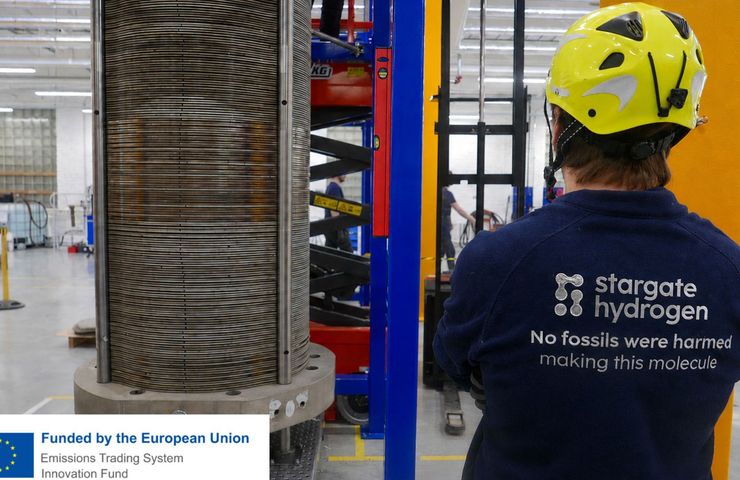
Stargate Hydrogen has just landed a €20.6 million grant from the EU Innovation Fund through CINEA to ramp up its electrolyser manufacturing in Tallinn, Estonia. This financial boost is set to support a phased expansion of their production capacity for alkaline electrolyser components and systems, addressing a significant bottleneck in the green hydrogen supply chains.
As part of this expansion, the Tallinn facility is eyeing impressive annual manufacturing goals: 250 MW for alkaline electrolyser electrodes, 150 MW for pressurized alkaline stacks, and 66 MW for complete electrolyser systems. These production stages cover everything from making catalyst-coated electrodes to full assembly, but it’s important to note that these numbers shouldn’t just be summed up as a single output. This new move builds on an earlier factory opening that set a benchmark with a reported capacity of 140 MW, which marks a shift from pilot operations to full-blown industrial production.
The Scale-Up Plan
Stargate Hydrogen is really focused on its proprietary stack architecture along with a ceramic-based catalyst coating. This innovative approach aims to cut down—or even eliminate—the need for precious metals. In a landscape where critical raw materials are in high demand, they believe this catalyst could make a big difference in terms of material durability. The expansion will happen in phases, starting off with the electrode production modules, followed by pressurized stack assembly and the integration of complete systems.
They’ve begun forging partnerships and pinpointing potential customers across Europe, including utilities and industries like steel, fertilizers, and chemicals—fields where the push for clean hydrogen is essential for decarbonization. While it’s great to see the demand, Stargate still has to finalize commercial contracts and make those all-important investment decisions before diving into operations.
Last year, Stargate Hydrogen opened its first electrolyser factory in Tallinn with an initial output capacity of 140 MW, and they’re hopeful that with the right support, they can scale that up beyond 1 GW. This new grant-backed expansion clearly signals a move from pilot initiatives to a larger commercial presence. According to estimates from Estonian public-agency reports, this project could create around 150 direct jobs, in addition to more roles in construction, logistics, and ongoing maintenance.
This local manufacturing effort aligns perfectly with the EU’s broader hydrogen strategy under the Green Deal, which aims for up to 10 MT of renewable hydrogen by the middle of the century. Together with electrolyser factories popping up in Germany, France, and Spain, the Tallinn site could become part of a much-needed network across Europe, helping to lessen the strain on electric systems and fortifying supply chains.
Even though Denmark and Germany have been leading the way in alkaline-electrolyser production, newcomers like Stargate Hydrogen are shaking things up in the competitive landscape. Smaller companies often have the agility to innovate quicker with materials and stack designs, although scaling up can be tricky and sometimes brings unexpected engineering challenges.
However, securing renewable power to fully operate the factory remains a challenge. Manufacturing electrolysers is energy-intensive, with processes like coating, sealing, and testing. If the grid electricity isn’t sourced from low-carbon options, it can muddy the net environmental benefits—a strong reminder that every link in the clean technology supply chain should be scrutinized for its carbon footprint.
Why Alkaline Electrolysis Matters
Alkaline electrolysis is actually one of the oldest methods for hydrogen production. It works by using an alkaline solution, electrodes, and diaphragms to split water into hydrogen and oxygen. By generating hydrogen at elevated pressures via pressurized stacks, it can significantly reduce the energy needed for post-production compression. While this technology’s been around longer and has a proven track record, it often sacrifices a quick response time in exchange for larger-scale and steady operation compared to newer proton-exchange membrane systems.
When it comes to scaling up renewable hydrogen projects, the availability, cost, and performance of electrolyser systems are often seen as significant hurdles. As renewable electricity continues to compete with industrial demands, boosting Europe’s domestic equipment capacity could help lessen lead times, diversify supplier options, and cut down on imports.
An Industrial-Policy Crossroads
This grant is part of a larger effort by the EU to connect their climate goals with industrial self-sufficiency. The EU Innovation Fund, which is funded through revenue from the Emissions Trading System, aims to direct public resources toward technologies that can effectively reduce emissions and promote local manufacturing. By backing relatively new players like Stargate Hydrogen, this initiative hopes to cultivate a competitive European supply chain instead of relying on distant producers.
Estonia’s tech-forward economy has been nurturing startups and clean energy businesses since it joined the EU. The addition of an electrolyser factory in Tallinn signifies the country’s ambition to capture a slice of the hydrogen market, even as neighboring nations gear up their own production endeavors.
Challenges Ahead
Yet, signing that grant isn’t a silver bullet. Stargate Hydrogen has a mountain of tasks to tackle, like securing skilled labor, finalizing engineering designs, managing construction timelines, and ensuring quality control for pressure-rated equipment. They also need to pin down electricity supply contracts and navigate the certification processes for high-pressure hydrogen systems, which is no small feat.
There are still questions up in the air regarding the actual performance of the ceramic catalyst and the durability of stacks over the long haul. So far, there hasn’t been independent verification of efficiency improvements or lifecycle cost savings, meaning the design concepts should be considered aspirational targets rather than established facts.
Looking Forward
So, will this expansion really cut lead times and bring down electrolyser costs as intended? If everything goes smoothly, the Tallinn facility could play a key role in a wave of green hydrogen projects throughout Europe. Ultimately, the real test will come down to how well they can execute commissioning timelines and capacity utilization, and whether these systems can meet the demands of industrial decarbonization.
In this rapidly evolving clean hydrogen landscape, scaling up production is a crucial chapter. By enhancing manufacturing capabilities on the continent, Stargate Hydrogen and its EU supporters aim to turn ambitious policy plans into real-world achievements. The next few years will reveal if this investment will build a robust supply chain or simply remain a sidelined asset in Europe’s green hydrogen vision.
And it doesn't stop there; global demand for electrolysers is heating up in markets ranging from Asia to North America. If Stargate Hydrogen can successfully refine its ceramic catalyst and the pressurized stacks on a large scale, there could be some exciting export opportunities on the horizon. However, international buyers will be on the lookout for technical certifications and proven track records—benchmarks that only operational data can validate.
In many ways, this Tallinn expansion represents both an end and a beginning. It's the culmination of early research and development efforts, opening the door for large-scale supply. As orders pile up from steel mills, fertilizer plants, and ammonia producers, the true measure of success will be whether this factory can transform public funding into effective equipment that drives Europe’s hydrogen ambitions forward.