Hydrogen news
General Motors and US Department of Energy team up on hydrogen trucks
GM and the DoE are working together to develop medium-duty vehicles powered by H2. General Motors (GM) has announced that it will be developing and building medium-duty hydrogen trucks as a component of a US Department of Energy (DoE) supported pilot project. Building a better understanding of what H2 can do in transport The purpose of the partnership is to offer a clearer understanding of what hydrogen trucks are capable of doing in terms of decarbonization of fleets, performance and cost when used as an alternative to diesel-powered vehicles. “We will design, engineer and develop a fleet o…

GM and the DoE are working together to develop medium-duty vehicles powered by H2.
General Motors (GM) has announced that it will be developing and building medium-duty hydrogen trucks as a component of a US Department of Energy (DoE) supported pilot project.Building a better understanding of what H2 can do in transport
The purpose of the partnership is to offer a clearer understanding of what hydrogen trucks are capable of doing in terms of decarbonization of fleets, performance and cost when used as an alternative to diesel-powered vehicles. “We will design, engineer and develop a fleet of hydrogen fuel-cell medium-duty trucks to demonstrate how the capability and strength of our fuel cells can help real-world fleet customers,” said GM project lead Jacob Lozier.DoE SuperTruck program will help fund development of the hydrogen trucks
The development of the fleet of hydrogen trucks will be funded by the SuperTruck program through the Department of Energy. The purpose of the SuperTruck program is to support the development of technology and strategies that will help to decarbonize heavy- and medium-duty vehicles. The project’s total cost will be $65 million. Of that, the DoE’s SuperTruck program will provide $26 million. The remainder will be covered by General Motors and its other partners.A Chevy Silverado 5500 exterior
The hydrogen trucks GM will be creating will use a Chevy Silverado 5500 medium-duty vehicle exterior. That said, the engine will be very different, as it will contain fuel cells developed by the automaker’s Hydrotec division.GM Hydrogen Vehicle History - Timeline
GM's Hydrotec division has a fascinating history in the field of hydrogen fuel cell technology. Here's a brief timeline:
- 1966: The Electrovan: GM made its initial venture into the realm of hydrogen fuel cell vehicles with the introduction of the Electrovan, the first hydrogen powered car/van. This vehicle, built on the framework of a GMC Handi-Van, utilized an innovative Union Carbide fuel cell to drive an electric motor. While it was a significant breakthrough in its time, the Electrovan did not enter mass production due to various factors, including high production costs, low efficiency and difficulties related to hydrogen storage. It had the capability to cover a distance of 120 miles and reach a top speed of 70 miles per hour.
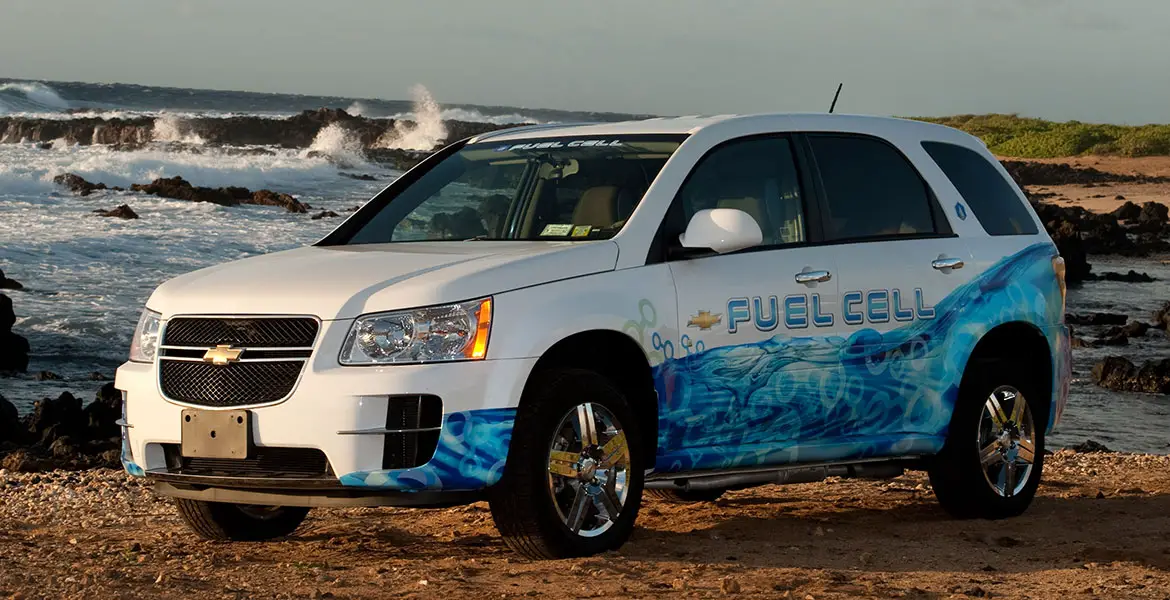
- 2007: Chevrolet Equinox Fuel Cell: Fast forward to 2007, GM introduced the Chevrolet Equinox Fuel Cell as part of Project Driveway, a pioneering market test of fuel cell vehicles. The Equinox Fuel Cell had a range of approximately 200 miles and was given to customers across the U.S., Europe and Asia for free testing. Although the project concluded in 2010, the experiences and feedback gathered from real-world users greatly informed GM's ongoing development of fuel cell technology.
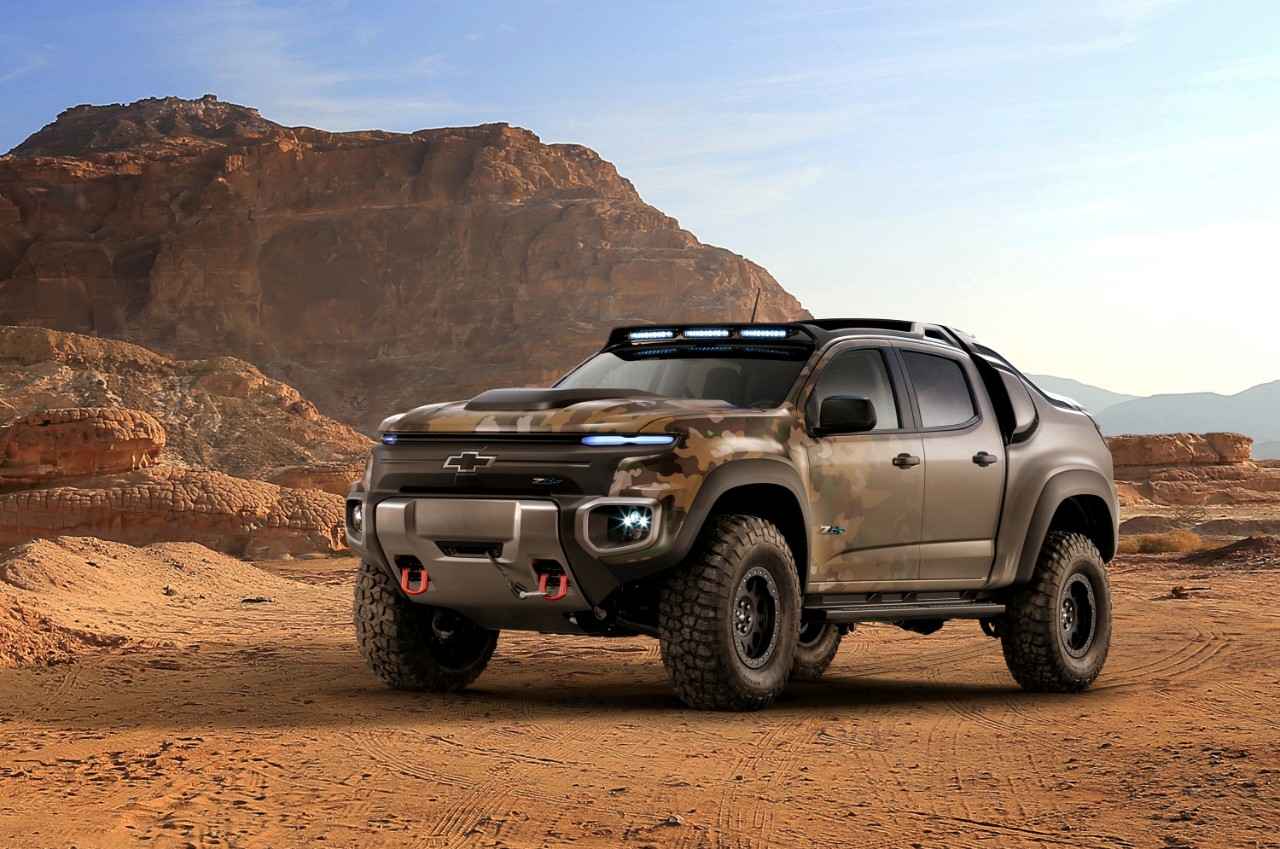
- 2017: Chevrolet Colorado ZH2: In 2017, GM presented the Chevrolet Colorado ZH2, a hydrogen fuel cell powered pickup truck, to the U.S. Army for testing under severe field conditions. The ZH2 demonstrated the viability of GM's advanced fuel cell technology for military use, featuring near-silent operation, reduced acoustic and thermal signatures and high wheel torque at all speeds. The outcomes of this testing have not been publicly released, but it's evident that GM is continually investigating the potential of hydrogen fuel cells for various applications.
Committing to H2
GM is already participating in several other decarbonization projects that work with H2 as a fuel, including for heavy-duty vehicles, as well as mobile power generators and large equipment such as cement mixers. Recently, the automaker also announced that it had entered into a joint venture with Honda for developing fuel cells for a range of applications.Using the fleet of hydrogen trucks
Once the fleet of Chevy Silverado 5500 hydrogen trucks is ready, General Motors will deliver them to a gas an electricity utility in Atlanta called Southern Company. That said, GM believes that the vehicles will have uses in many different applications ranging from municipal services to farming. “We know how to make hydrogen fuel cells,” said Hydrotec Executive Director Charles Freese, “but demonstrating it as part of an ecosystem where you’re starting to balance the supply and fueling of hydrogen along with the use and application of the trucks. Those are all elements of what we’re going to demonstrate with this fleet.” As we move forward, the world will be watching closely to see the outcomes of this exciting project. If successful, it could pave the way for broader adoption of hydrogen fuel cell technology in the transportation sector, bringing us one step closer to a cleaner, greener future.How was this article?
Thanks for the feedback!