Hydrogen news
Germany takes on new hydrogen fuel import strategy to bolster future security
The new plan is meant to enhance investment security in the country in the medium to long term The German government has developed and taken on a new hydrogen fuel import strategy for the purpose of driving investment security while strengthening demand in the medium and long term. This is a rising trend as The Netherlands saw notable growth in recent months The new strategy is focused on imports of hydrogen fuel and hydrogen derivatives. It is establishing a foundation “for the urgently needed imports to Germany” in coming years and into the future. The German government has assumed a nat…
The new plan is meant to enhance investment security in the country in the medium to long term
The German government has developed and taken on a new hydrogen fuel import strategy for the purpose of driving investment security while strengthening demand in the medium and long term.This is a rising trend as The Netherlands saw notable growth in recent months
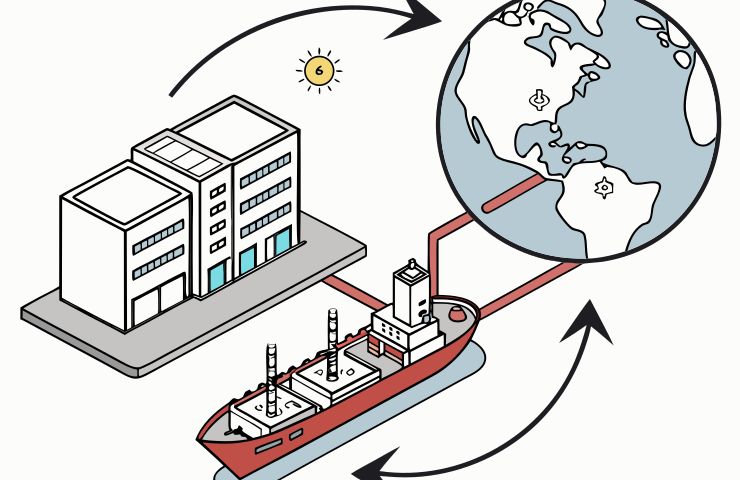
The new strategy is focused on imports of hydrogen fuel and hydrogen derivatives. It is establishing a foundation “for the urgently needed imports to Germany” in coming years and into the future. The German government has assumed a national demand for gaseous or liquid H2, molecular H2, ammonia, methanol, naphtha, and electricity-based fuels of 95 to 130 TWh in 2030. They have assumed that between 50 percent and 70 percent of the national demand (therefore, between 45 and 90 TWh) will likely need to be imported. Furthermore, the expectation is that there will be a rise in the proportion of imports which will continue after 2030.Hydrogen fuel demand could rise to 360 to 500 TWh by 2045
By that same year, they expect that H2 derivatives will increase to about 200 TWh. The German import strategy aligns with initiatives such as the National Hydrogen Strategy. “The import strategy thus creates investment security for hydrogen production in partner countries, the development of the necessary import infrastructure and for German industry as a customer,” explained Robert Habeck, German Economic Affairs Minister. Habeck stated that the goal is to achieve as much diversification of the sources of their clean energy as possible.
Growing H2 nearby in nearby Netherlands
As much as Germany has been paying attention to its own market as it creates its prediction models, it has also been looking to other nearby examples to watch those trends. In The Netherlands, supply and demand grew substantially between October 2023 and April 2024. That said, even there, the projects haven’t moved beyond their development phases, according to ICIS. This underscores a market in which there continues to be weak financial investment decisions (FIDs). “Data from the ICIS Hydrogen Foresight project database reveals that the announced low-carbon hydrogen production capacity climbed to approximately 17 GW by 2040 as of April 2024, with 74% of this capacity expected to be online by 2035,” read a recent statement from the ICIS.How was this article?
Thanks for the feedback!