Fuel cell technology brings on-site power resilience to Japanese data centers through Hitachi–Bloom Energy tie-up
Hitachi and Bloom Energy are collaborating to deploy solid oxide fuel cell systems for on-site power, enhancing reliability and enabling distributed generation at Japanese data centers and industrial sites.
As the demand for electricity surges due to AI-driven workloads and more semiconductor manufacturing, Japanese data centers are hitting a pivotal moment. With grid upgrades often taking years, operators are left scrambling for solutions to meet their growing power needs. That’s where an exciting new partnership between Hitachi and Bloom Energy comes into play, offering up modular on-site power generation through solid oxide fuel cell stacks. This collaboration could really shake things up for reliable and efficient energy supply while boosting hydrogen infrastructure in Japan’s advanced industrial sectors.
Back in early September 2026, Hitachi, Ltd. and Bloom Energy Corporation announced they’re teaming up to roll out fuel cell-powered solutions directly at data centers and industrial sites across Japan. Hitachi will spearhead the overall planning, design, system integration, and operational support—leaning into their extensive know-how in Operational Technology and control systems. Meanwhile, Bloom Energy will provide its modular Energy Servers, each cranking out around 325 kW, and offer technical support during installation and commissioning. The goal? To help customers bolster their energy resilience, secure backup power, and lessen reliance on the grid, all while vying against the skyrocketing demand for high-reliability electricity.
Solid Oxide Fuel Cells Drive Distributed Generation
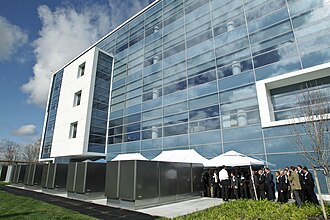
Now, at the heart of this collaboration lies the impressive performance of Bloom’s solid oxide fuel cells. These nifty units, sometimes dubbed “Bloom Boxes,” transform fuels like natural gas, biogas, or hydrogen blends into grid-ready AC electricity without any combustion, thanks to an electrochemical process. Operating at temperatures between 500 and 1,000 °C, they boast high electrical efficiencies averaging between 53% and 65% of the lower heating value range. Each server is made up of several ceramic cell stacks, with four to six modules combined to deliver a power output between 200 and 325 kW. Customers can set up multiple servers side by side to tackle anything from a few hundred kilowatts to massive ten-megawatt setups—perfect for both continuous base-load supply and peak shaving. Best of all, these on-site systems can typically be installed in about 12 to 18 months, which is often much quicker than waiting for grid upgrades that can drag on for years. By generating power right where it’s used, this distributed generation method cuts down transmission losses and boosts overall reliability.
So, what makes these solid oxide fuel cells tick? At their core is a solid electrolyte, usually stabilized zirconia, which allows oxygen ions to move from the cathode to the anode. Here’s where the magic happens: the ions oxidize hydrogen or other fuels’ reformate, producing electricity and water as the main byproduct—all without combustion or moving parts. That means the system runs quietly and can even include internal fuel reforming for a further efficiency boost while cutting down on extra equipment.
Operational Technology Ensures Seamless Integration
On their end, Hitachi brings decades of know-how in managing industrial control and infrastructure systems. Their Operational Technology (OT) platforms are designed to keep an eye on supervisory control, automation, and protection functions across complex energy setups. In this partnership, Hitachi will figure out how to integrate Bloom’s servers with existing switchgear, transformers, and distribution panels, ensuring everything stays safe and in sync with the grid or operates smoothly as an independent microgrid. Custom control logic will manage the start-up and shut-down sequences, detect any faults, and coordinate power flow. Plus, operators will benefit from visualization dashboards and analytics tools to monitor performance in real-time, helping to optimize dispatch based on load profiles and fuel availability. By blending Bloom’s modular SOFC technology with Hitachi’s control and automation savvy, they’re paving a turnkey route to on-site power generation that’s perfectly in line with Japan’s push for more resilient, digitized energy systems.
Strategic Implications for Energy Markets
Looking at the bigger picture, this partnership tackles several of the challenges that Japanese industries and digital sectors face. Data centers reliant on AI and high-performance computing need continuous, uninterruptible electricity. Unfortunately, the central grid in urban areas is often running at max capacity. That’s where fuel cell technology steps in: it can help ease bottlenecks without waiting for new transmission lines, a process that can take five years or more. For semiconductor fabs and heavy industries, on-site generation provides cleaner backup and primary power than some older thermal plants, especially when biogas or low-carbon hydrogen blends come into play. While initial setups may lean on natural gas, the same SOFC technology can switch over to green hydrogen as it becomes more accessible under Japan’s hydrogen strategy. Financially, facility operators can redirect funds from pricey grid connection upgrades toward more flexible modular generation assets and integration services. For Hitachi, this partnership is a great way to deepen its influence in advanced energy; for Bloom Energy, it opens a vital market in a nation eager to pursue distributed hydrogen infrastructure and decarbonization.
Japan’s Energy Transition Context
Japan’s always had limited domestic fossil fuel resources and has historically relied on imports of oil, coal, and LNG. For the past couple of decades, the government has been pushing for hydrogen and fuel cell research, spanning everything from residential micro-CHP systems to mobility applications. Recently, national policies have shifted to focusing on resilient power for critical infrastructure, understanding that natural disasters and energy shifts can disrupt centralized supply. With the explosion of data centers fueled by cloud services and AI, the urgency for robust energy solutions has never been higher. In this context, collaborations like the one between Hitachi and Bloom Energy blend global expertise in fuel cells with local know-how—an ideal fit for Japan’s broader decarbonization and digital transformation goals. It’s also a testament to Japanese conglomerates teaming up with foreign tech firms to help fast-track the deployment of cutting-edge energy solutions.
Looking Ahead
While specific project sites and capacities are still under wraps, you can bet that early adopters within the data center and industrial sectors are going to be keeping a close eye on those initial deployments. If successful, it could pave the way for a broader adoption of hydrogen fuel cells, alongside complementary technologies like battery storage and renewable PPAs. Regulators might also be inclined to update interconnection standards to make room for distributed generation and microgrids. Before long, as green hydrogen production ramps up through electrolysis, these SOFC systems could solidify a low-carbon power ecosystem—melding high efficiency with flexible dispatch capabilities. In this way, the Hitachi–Bloom Energy partnership might serve as a benchmark for how Japan weaves clean hydrogen and fuel cells into its energy fabric—providing both reliability and environmental benefits without the long wait for new transmission lines.
In a landscape where energy resilience and quick deployment are crucial, the Hitachi and Bloom Energy collaboration marks a significant move toward decentralized, high-efficiency power. As installations ramp up, the real challenge will be seeing just how effectively this fusion of advanced fuel cell tech and operational control can rise to meet the dynamic demands of Japan’s critical infrastructure.