Hydrogen news
Fracking waste water used to produce geothermal energy
The fracking industry may prove useful for geothermal. Some oil fracking companies who are interested in boosting their revenue and improving their green image, have found a way to make use of the massive amount of toxic waste water that is generated during the hydraulic fracturing process, by using it to produce geothermal energy. Electricity generated can be used on site or sold to the electricity grid. According to a report from Bloomberg, for every barrel of oil that is produced from a frack well, there are seven more barrels of water, and most of this water is boiling hot. Rather than le…
The fracking industry may prove useful for geothermal.
Some oil fracking companies who are interested in boosting their revenue and improving their green image, have found a way to make use of the massive amount of toxic waste water that is generated during the hydraulic fracturing process, by using it to produce geothermal energy.Electricity generated can be used on site or sold to the electricity grid.
According to a report from Bloomberg, for every barrel of oil that is produced from a frack well, there are seven more barrels of water, and most of this water is boiling hot. Rather than let this water go to waste, some companies are planning to make use of that heat to turn it into electricity that they can either use to power their own projects on site or that they can hook up to power lines and sell it to the local electricity grid. Research for this geothermal waste water idea started at the University of North Dakota. Researchers at the university were investigating ways to utilize geothermal resources from the thousands of frack wells that had been drilled using new horizontal drilling technology.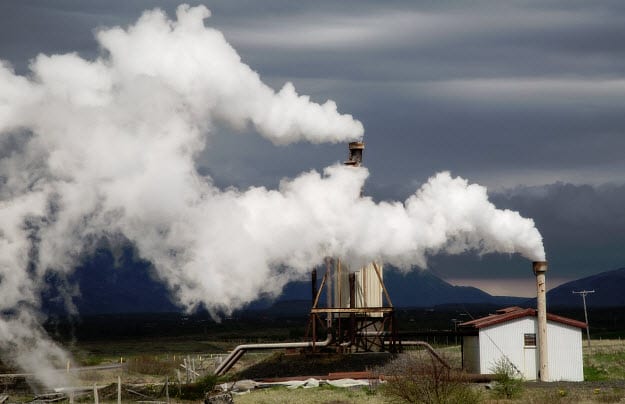 The research team hooked up off-the-shelf geothermal generators to pipes transporting boiling waste water. The project will soon be tested by companies like Continental Resources Inc. and Hungary’s MOL Group. Once activated, large pumps will push the steaming water though the generators located in 40-foot containers. The heat will then turn turbines that generate electricity before the water is forced back underground to draw up more oil.
The benefits of the combined fracking and geothermal energy operations could be significant.
The technology is still in its early testing stages and has not yet been applied on a broad scale. That being said, early results have shown a lot of promise. The hope is that if the technology could be extensively adopted, the financial and environmental benefits would be huge. However, at the moment, the cost ($3.4 million) to test the technology is still too steep to be able to apply it to numerous wells. However, according to Continental Resources production manager, Greg Rowe, if the cost of the technology can be reduced and widely applied, in addition to generating electricity, the technology will also make wells more profitable and extend their economic life. The U.S. Energy Department estimates that a 250 kilowatt geothermal generator could contribute an additional $100,000 annually for each well. Furthermore, considering that 25 billion gallons of water is processed by drillers in America each year, this amount of water could sufficiently produce as much power as three coal-fired plants running non-stop, but without carbon emissions. Lorne Stockman, the research director at Oil Change International, an environmental organization promoting non-fossil fuel power, said that geothermal energy has the potential to boost the green image of frackers, which have often been seen as the oil industry’s worst polluters. “This is one way to make it look like the industry cares about the carbon issue,” he said.How was this article?
Thanks for the feedback!