News
Elcogen and Casale Partner to Bring High-Efficiency SOEC to Green Ammonia Production
Elcogen and Casale SA are teaming up to integrate high-efficiency SOEC into green ammonia production processes, aiming to cut CO₂ emissions by up to 90% and support global hydrogen decarbonization goals.
High-Temperature Electrolysis Meets Next-Gen Ammonia
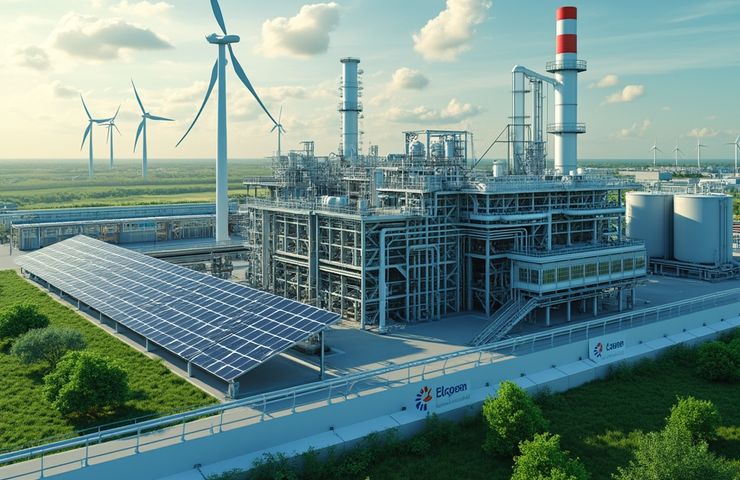
Two major European players—Elcogen and Casale SA—are joining forces in a move that could reshape one of the biggest carbon offenders in heavy industry: ammonia production. Announced in 2024, their partnership brings together Elcogen’s solid oxide electrolysis cell (SOEC) tech and Casale’s tried-and-true ammonia plant designs. The aim? To supercharge green ammonia output and give global industrial decarbonization a serious boost through cutting-edge Power-to-X solutions.
Cleaning Up One of Industry’s Dirtiest Secrets
Let’s not sugarcoat it—traditional ammonia production is a carbon monster. For every ton of ammonia, about 2.3 tons of CO₂ are pumped into the atmosphere, thanks mostly to hydrogen made from natural gas. In total, it makes up around 1.8% of global CO₂ emissions. That’s a staggering footprint—and exactly what Elcogen and Casale are out to shrink.
Their plan? Replace that fossil-based hydrogen with green hydrogen created via SOEC tech and renewable electricity. Integrate that into Casale’s efficient ammonia synthesis process, and boom—emissions could drop by up to 90%. That’s good news for fertilizer makers, shippers eyeing clean fuel, and countries scrambling to hit carbon neutrality goals like the EU’s Fit for 55.
SOEC: The Unsung Hero of Electrolysis Tech
Let’s geek out for a minute. Not all electrolysis methods are built the same. Sure, PEM and alkaline are the most common today, but Elcogen’s SOEC brings something new to the table. It runs hot—700 to 900°C—and uses solid oxide materials, making it super-efficient, clocking in at around 85%. That’s 20% better than many lower-temperature rivals, which could be a game changer for energy-hungry processes like ammonia production.
And there’s more. SOEC doesn't rely on rare and expensive platinum-group metals. Instead, it uses nickel-based catalysts, which are easier on the wallet and much more supply-chain-friendly. That’s a double win in today’s unpredictable materials market.
Casale’s Global Clout: More Than Just a Partner
This isn't some small-scale trial in a lab somewhere. Casale SA has been in the ammonia game for over 100 years. Right now, their tech powers close to 12% of the world’s ammonia plants. Their innovative reactor designs already cut energy use by up to 15% compared to older systems. So imagine what happens when you plug SOEC tech into their platform. It’s a major upgrade to their green ammonia playbook.
While the two companies aren’t exclusive partners—they’ve signed a non-binding Memorandum of Understanding—they clearly see eye to eye. Pairing a top-tier electrolysis innovator with a heavyweight ammonia design firm could be the kind of match that sets real change in motion.
Why This Matters More Than You Think
This collaboration isn’t just about ammonia. It’s about what happens when Power-to-X (P2X) really starts picking up steam. Think synthetic fuels, clean hydrogen carriers, even long-duration energy storage. Europe’s counting on crossover solutions like this to compete with hydrogen mega-projects rising in the Middle East and Australia.
And the timing couldn’t be better. The EU’s Innovation Fund has set aside a whopping €3.6 billion for clean tech projects like this. With ammonia becoming a serious contender as a hydrogen carrier—thanks to its high energy density and global shipping infrastructure—companies are racing to figure out cleaner ways to make it.
What’s Next? And What Could Slow Things Down?
Of course, it’s not all smooth sailing. Scaling up SOEC comes with a few technical headwinds. High operating temps mean tougher material challenges and more complex systems engineering. And for this to work at scale, cheap and stable renewable electricity is a must.
But here’s the thing—Elcogen has already made big strides in industrial-soec development. And the fact that an industry staple like Casale is ready to move forward with this integration? That says a lot about the tech’s readiness.
Quiet Disruption in Action
This Elcogen-Casale deal might not be front-page news, but it’s exactly the kind of behind-the-scenes advancement that can nudge whole industries forward. It’s bold in its technical ambition, smart in its timing, and deeply rooted in real-world impact.
Whether this leads to the next fully green ammonia facility or simply sets a new efficiency standard, it reinforces one important message: net-zero ammonia isn’t some pipe dream—it’s increasingly within reach.
Stay tuned for updates on pilot plants, rollout plans, and funding milestones. One thing’s for sure: this is a space to watch as clean ammonia, green hydrogen, and SOEC technologies come together to rewrite the industrial playbook.
How was this article?
Thanks for the feedback!