Additively Manufactured Gas-Turbine Injector Promises Fuel Flexibility
A German research team has laboratory-tested a 3D-printed gas-turbine injector able to burn hydrogen, natural gas, methanol, e-fuels and kerosene. The AMFlexInj project aims to demonstrate fuel flexibility via additive manufacturing before moving to prototype validation under high pressure.
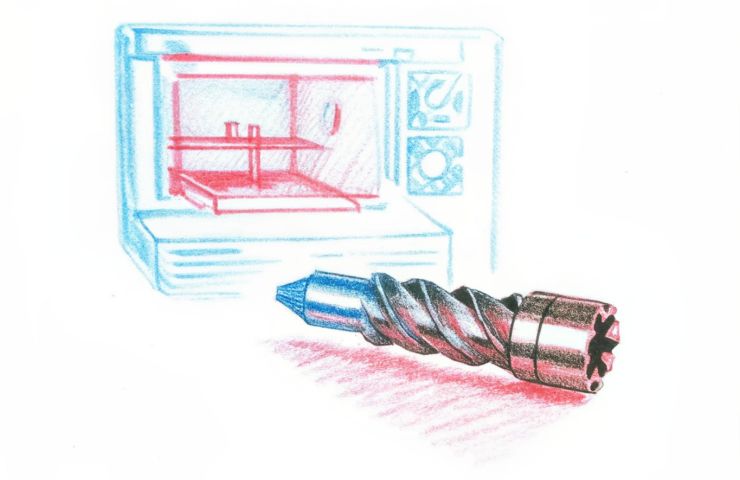
Researchers at the University of Stuttgart and the German Aerospace Center (DLR) in Stuttgart have laboratory-tested an additively manufactured injector designed for compact gas turbines, according to the University of Stuttgart. The device is intended to accommodate hydrogen, natural gas, methanol, e-fuels and kerosene without swapping hardware, the university says. Early experiments at the university’s Institute of Combustion Technology for Aerospace Engineering concentrated on achieving clean combustion and stable fuel‑air mixing across fuels that behave very differently.
The work sits within the AMFlexInj project, which the university describes as a technology‑validation effort funded through Germany’s Federal Ministry of Education and Research VIP+ programme with approximately EUR 1.5 million in support, according to project materials.
Can a Single Injector Handle Multiple Fuels?
Gas turbines commonly use injectors tailored to a single fuel. That’s because viscosity, density and combustion characteristics differ greatly between hydrogen, natural gas and liquid hydrocarbons, the university explains. Hydrogen burns with a high flame speed and low ignition energy, increasing the risk of flashback into upstream passages, while kerosene and methanol require precise atomization and evaporation before stable combustion, Dr. Fabian Hampp says. These divergent behaviors make a one‑size‑fits‑all injector a demanding engineering problem.
To confront that challenge, the team merged an aircraft‑style injection principle with metal additive manufacturing. In metal powder‑bed fusion, a laser melts thin layers of metal powder according to a digital design. This process enables integrated internal passages and complex geometries that are difficult to achieve through conventional machining, according to the University of Stuttgart.
Key design elements include:
- Micro-scale fuel channels that distribute gas or atomized liquid uniformly, maintaining a consistent mixture entering the combustion zone, the university reports.
- As-built surface roughness accounted for by tailored passage shapes, ensuring reliable flow despite powder-bed-fusion constraints, Prof. Dr. Hans-Christian Möhring explains.
- A compact form factor intended for direct integration into additively manufactured burners, reducing part count and assembly interfaces.
- Adaptable injector geometry that can be tuned for different fuel blends through digital redesign rather than hardware replacement.
Who’s Driving the Project?
Dr. Fabian Hampp leads combustion research at the Institute of Combustion Technology for Aerospace Engineering, University of Stuttgart, handling spray diagnostics and emissions measurements under various laboratory conditions, the university says. Hampp underscores the role of homogeneous mixing as a way to minimize soot, carbon monoxide and nitrogen oxides across fuels.
Prof. Dr. Hans-Christian Möhring, director of the Institute for Machine Tools at the University of Stuttgart, contributed expertise on powder‑bed fusion parameters and post‑processing. Möhring points out that printed surfaces are inherently rougher than machined parts, requiring careful geometric compensation in injector design.
Dr. Oliver Lammel of DLR Stuttgart’s Institute of Combustion Technology is collaborating on jet‑stabilized FLOX burner systems and plans to validate the prototype under high‑pressure conditions, according to the university. DLR Stuttgart will test performance stability and emissions once the injector’s geometry and print quality are optimized.
Why Fuel Flexibility Matters
Dispatchable gas turbines remain essential for balancing variable renewable generation. But relying on natural gas ties operators to fossil‑carbon emissions, the university notes. A fuel‑flexible injector could allow a single unit to transition between fuels as infrastructure, prices and regulations evolve, potentially reducing downtime and retrofit costs compared with installing dedicated hydrogen or e‑fuel systems.
- Grid resilience: turbines can switch to hydrogen or synthetic fuels when gas supplies are constrained.
- Lower lifecycle emissions: using green hydrogen or carbon-neutral e-fuels may cut net CO₂ output, depending on production pathways.
- Simplified maintenance: integrated injectors could lower part counts and reduce leak points.
- Digital flexibility: injectors can be redesigned in software for new fuel blends without major hardware overhauls.
What’s Next for AMFlexInj?
The University of Stuttgart emphasizes that the injector has only undergone laboratory tests so far, and commercial deployment remains on the horizon. Under AMFlexInj, researchers plan to optimize laser powder‑bed fusion settings and nozzle geometry before building a full‑scale prototype, project literature indicates. After that, the prototype will be tested at DLR Stuttgart under elevated pressures and temperature cycles to assess durability and combustion performance.
Key milestones ahead include:
- Finalizing additive-manufacturing parameters for reliable nozzle production.
- Validating spray and mixing performance with hydrogen, natural gas, methanol, e-fuels and kerosene under high pressure.
- Measuring quantitative emissions of NOₓ, CO and soot across fuel types in real-world burner setups.
- Assessing material fatigue, thermal cycling effects and repeatable production yield.
Engineering Challenges Remain
Additive manufacturing offers design freedom but also introduces complexities. Metal powder‑bed fusion parts often require post‑build heat treatment to relieve residual stresses, the university notes. Surface roughness may increase flow friction and affect spray patterns, requiring careful dimensioning of fuel channels. Quality control through nondestructive inspection is critical for small injection passages to avoid defects that could lead to performance variations or safety concerns.
Materials must also endure the high temperatures and cyclic stresses typical in gas‑turbine combustion chambers. Researchers will need to assess thermal fatigue life and ensure that printed alloys maintain mechanical integrity over thousands of operating hours, project documentation indicates. Those assessments will influence how quickly the design can move from laboratory demonstration to certified product.
Policy and Industry Alignment
The AMFlexInj project aligns with European energy policy initiatives to expand hydrogen and decarbonised‑gas networks, the University of Stuttgart states. By supporting fuel flexibility, the injector concept could work with future hydrogen infrastructure as it develops across Germany and the EU. At the same time, regulatory requirements for emissions measurement, certification and safety must be addressed before commercial adoption.
Public funding through the BMBF VIP+ programme reflects support for technologies aimed at reducing carbon and nitrogen oxide emissions from power generation, according to programme guidelines.
Digital Design Meets Combustion Engineering
The AMFlexInj injector design was created using advanced computational fluid dynamics to optimize flow paths for each fuel, the university describes. Digital twins of injector geometries allow engineers to simulate fuel‑air mixing and flame stabilization virtually, reducing the number of physical prototypes needed. Once a design meets performance targets in simulation, it can be directly sent to a powder‑bed fusion machine for printing, linking combustion research with digital manufacturing.
Beyond Power Plants
While compact gas turbines are a primary focus, the injector concept could find applications in small‑scale distributed generation, industrial combined heat and power units and potentially aerospace engines, the University of Stuttgart suggests. In aviation, for example, fuel‑flexible injectors might support sustainable aviation fuels or hydrogen blends, helping to lower life‑cycle emissions of future aircraft engines.
Looking Toward Broader Impact
If high‑pressure tests confirm laboratory findings, an additively manufactured, fuel‑flexible injector could appeal to operators seeking to decarbonize power generation and industrial heat. By linking combustion design directly to digital manufacturing, the approach may pave the way for burners that evolve with fuel markets and stricter emission standards, according to the University of Stuttgart.
While hurdles remain—such as ensuring consistent print quality, addressing surface roughness, and securing certification for safety‑critical components—the AMFlexInj effort showcases how advanced manufacturing techniques can support the energy transition. As power producers worldwide look for dispatchable yet lower‑carbon options, a versatile injector able to swap between hydrogen and hydrocarbons could become a key enabler of cleaner, more flexible gas‑turbine fleets.