Hydrogen news
So long North America, Toyota switches hydrogen vehicles sales focus to Europe and China
The Japanese automotive company wants to reach its 2030 sales target. In spite of Toyota Motor’s efforts, the company has yet to find success selling its hydrogen vehicles in North America. According to Toyota Motor executives, the automaker will now be setting its sights on Europe and China to sell its hydrogen-powered trucks and passenger cars as part of a push to sell 200,000 H2 vehicles by 2030. The demand for hydrogen is higher in Europe and China than it presently is in North America. By focusing on these markets where the demand and production of hydrogen is higher compared to North Am…

The Japanese automotive company wants to reach its 2030 sales target.
In spite of Toyota Motor’s efforts, the company has yet to find success selling its hydrogen vehicles in North America. According to Toyota Motor executives, the automaker will now be setting its sights on Europe and China to sell its hydrogen-powered trucks and passenger cars as part of a push to sell 200,000 H2 vehicles by 2030.The demand for hydrogen is higher in Europe and China than it presently is in North America.
By focusing on these markets where the demand and production of hydrogen is higher compared to North America, the company’s goal is to bring down the costs of hydrogen vehicles. Though Toyota’s hydrogen fuel cell vehicles use an electric motor like an electric vehicle, unlike electric vehicles (which use a traction battery pack to power the electric motor), fuel cell vehicles draw power from a fuel stack where hydrogen is separated by a catalyst, generating electricity. Toyota has long been a supporter of hydrogen fuel cell vehicles as an alternative to electric vehicles, as they can refuel quickly and have a long range. However, until now, the company’s focus has been on hydrogen passenger cars and the North American market. Specifically, almost a decade ago, Toyota launched the Mirai, the first fuel cell vehicle and a niche car it marketed in California. In the years following, consumer adoption of these vehicles has been limited due to high costs and a lacking network of H2 fueling stations.Hydrogen vehicles made up less than half of 1% of Toyota’s global vehicle sales in 2022.
Last year, the company sold just over 3,900 fuel cell vehicles of its approximately 9.5 million global vehicles sales. Just over 3,900 is a far smaller number than the 200,000 hydrogen vehicles the company is aiming to sell by the end of the decade. [caption id="attachment_59655" align="aligncenter" width="1200"]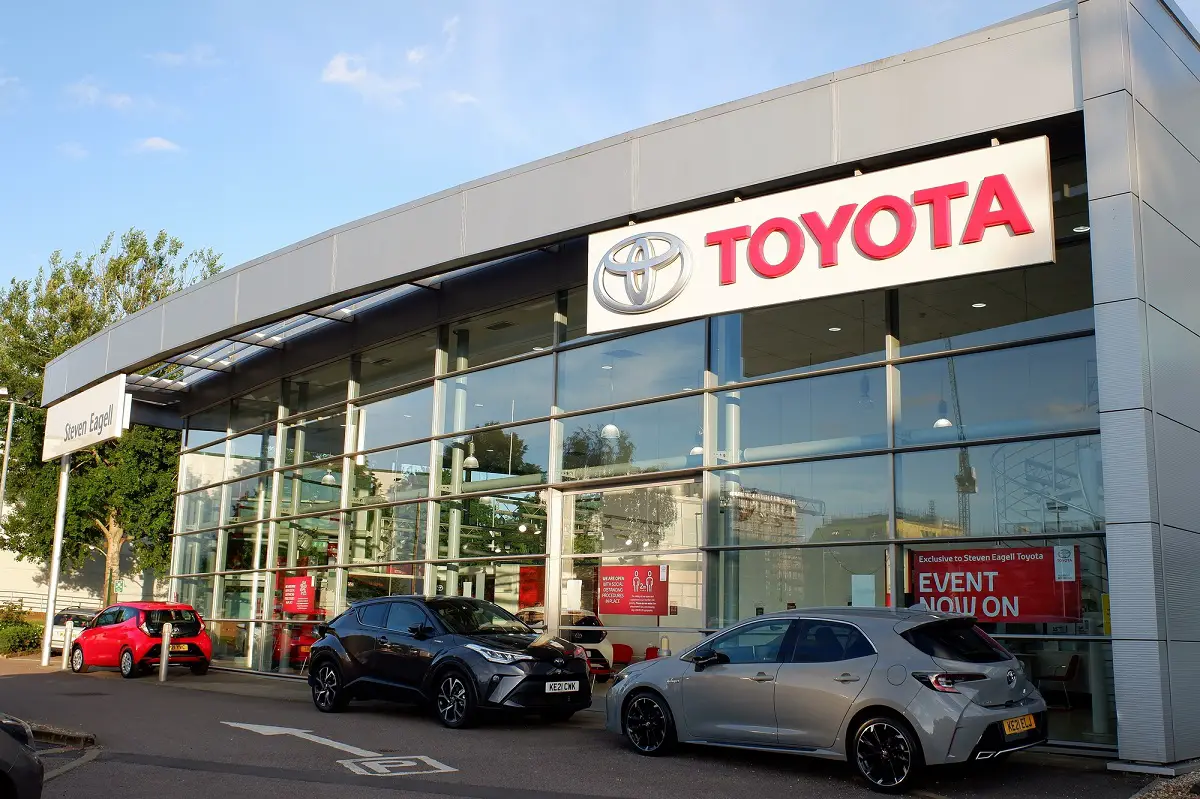 Credit: Photo by depositphotos.com[/caption]
That said, according to Reuters, Toyota’s CTO, Hiroki Nakajima, told reporters that 200,000 isn’t a big number. “We believe this number and more can be achieved,” Nakajima said.
Credit: Photo by depositphotos.com[/caption]
That said, according to Reuters, Toyota’s CTO, Hiroki Nakajima, told reporters that 200,000 isn’t a big number. “We believe this number and more can be achieved,” Nakajima said.
Toyota is expanding its H2 technology into wider applications.
Toyota’s recent decision to shift its markets focus comes after the company launched its Hydrogen Factory, a dedicated fuel-cell unit that employs 1,350 staff, earlier this month. The purpose of Toyota’s Hydrogen Factory is to expand the application of fuel cell technology beyond passenger hydrogen vehicles into wider applications. Among these applications include commercial trucks and power generation. According to Reuters, by 2030, Toyota expects that the global market for fuel cells will grow to about $35 billion. Ready to test your knowledge on the most abundant element in the universe? Take our fun and engaging Hydrogen Quiz now! [forminator_quiz id="58712"]How was this article?
Thanks for the feedback!