Hydrogen Fuel Cells Power Spain’s First Off-Grid Ultra-Fast EV Charging Station
Spain debuts its first off-grid, hydrogen-powered EV charger — a scalable model combining fuel cells, solar, and batteries to bypass grid limits and emissions.
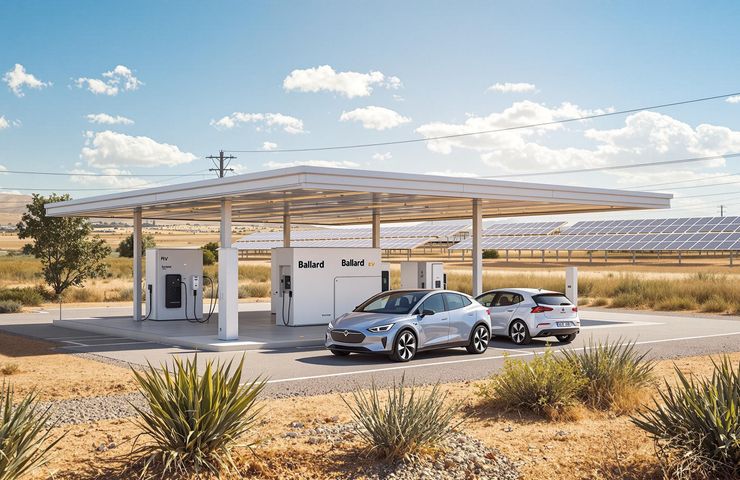
Ballard Power Systems just raised the bar with the launch of ECOASIS — Spain’s first fully off-grid, zero-emission EV charging station. Officially opened on June 17, 2025 at the El Cisne service station in Zaragoza, this project is more than just a charging point — it’s a bold blueprint for sustainable energy infrastructure powered by hydrogen fuel cells and solar energy. And here's the best part: it works entirely off the grid.
A Self-Sustaining Powerhouse
Brought to life through a collaboration between Ballard Power Systems (Canada), and Spanish partners Zoilo Rios Group, Circutor, and the CIRCE Technology Center, ECOASIS blends several clean energy technologies into one smart, grid-independent setup:
- Ballard FCmove®-HD+ fuel cell (100kW): Converts hydrogen into electricity to keep the station running 24/7.
- 500kWh battery system: Smooths out demand spikes and keeps supply steady.
- 220 solar panels (60.5kWp): Soaks up sunlight to power the station and top off the batteries.
- Hydrogen storage: Two tanks (13.5kg each at 200 bar) keep things humming when solar isn’t at its best.
- Two ultra-fast 150kW EV chargers: Designed to handle modern EVs and get drivers back on the road in no time.
This system doesn’t pull a single watt from the power grid. That makes it ideal for places where the electrical infrastructure is stretched thin — or nonexistent.
What Makes It Special?
- A first for Spain: It's the country’s premiere off-grid, hydrogen-powered charging station — fully self-contained and zero-emission.
- Keeps energy flowing in areas where the grid can’t keep up, like remote highways or busy truck hubs.
- Supports EU climate goals: Funded through the Moves Proyectos Singulares II program and backed by the Recovery and Resilience Facility.
- Easy to replicate: The model can be rolled out across rural or suburban Europe where grid access is an issue.
How the Tech Works
At the center of it all is the FCmove®-HD+ fuel cell — the same tough, reliable unit that’s been powering buses and trucks around the world. At ECOASIS, it works with solar panels and battery storage to provide always-on, clean energy. When the sun’s down or clouds roll in, the fuel cell kicks in using stored hydrogen, while the battery fills any power gaps — especially handy when multiple EVs plug in at once for fast charging.
Unlike traditional fast-charging stations that rely on massive grid connections or diesel backup generators, ECOASIS is totally grid-free. It’s a clean, clever way to offer modern charge speeds without relying on the old systems.
Bigger Than Just a Charging Station
ECOASIS isn’t just about topping up EV batteries — it's reshaping the future of how we power transport across Europe. For sun-rich regions like Southern Spain, where grid upgrades are slow and costly, this modular combo of fuel cell technology, batteries, and solar could be the key to a greener, more reliable charging network.
And for Ballard, this is more than a tech demo. After restructuring in 2024, this project shows they’re getting serious about putting their clean energy solutions to work. Partnering with local players like Zoilo Rios Group and Circutor is also a smart move — it roots the tech in the region and supports local innovation.
Zaragoza itself is a perfect test site — a city rich in industrial history, now on a path toward cleaner, smarter energy aligned with national and EU goals.
Why It Matters
- Policy testing ground: With backing from NextGeneration EU, ECOASIS could lay the groundwork for future EV charging policies across the continent.
- Portable solution: Perfect for highway corridors, remote tourism spots, or logistics hubs with limited electrical infrastructure.
- A green signal to investors: Proof that hydrogen infrastructure is more than a concept — it’s on the ground, scalable, and ready to roll.
Looking Ahead
ECOASIS is more than a landmark project — it's a sneak peek at the future of transport. As Europe pushes toward climate neutrality and cleaner mobility, setups like this one — fully off-grid, zero-emission, and tech-balanced — hit all the right notes. This hybrid of hydrogen fuel cells, solar, and batteries is quickly emerging as a top contender in the race for resilient clean energy.
The Takeaway
With EV demand climbing and grid systems already under pressure, energy autonomy isn't just a nice-to-have — it's becoming essential. ECOASIS doesn't just solve those problems — it rewrites the rules. One thing’s clear: from here on out, hydrogen-powered mobility isn’t a distant dream. It's here, it's happening — and it’s starting in Zaragoza.