Hydrogen news
Will Toyota’s Mirai hydrogen car updates be enough to popularize it?
Among the changes the H2-powered fuel cell car include the addition of the Beyond Zero badge. Toyota’s 2024 lineup includes a broad spectrum of different types of vehicles, including its one hydrogen car, the Mirai, and this year’s model has been given a number of updates, one of which is small but visible, as it is the same Beyond Zero badge that is seen on its Prius. The automaker’s fuel cell vehicle went through several upgrades to boost competition in its little market. The hydrogen car market may not be huge at the moment, but some predict that it has the opportunity to take off in comin…
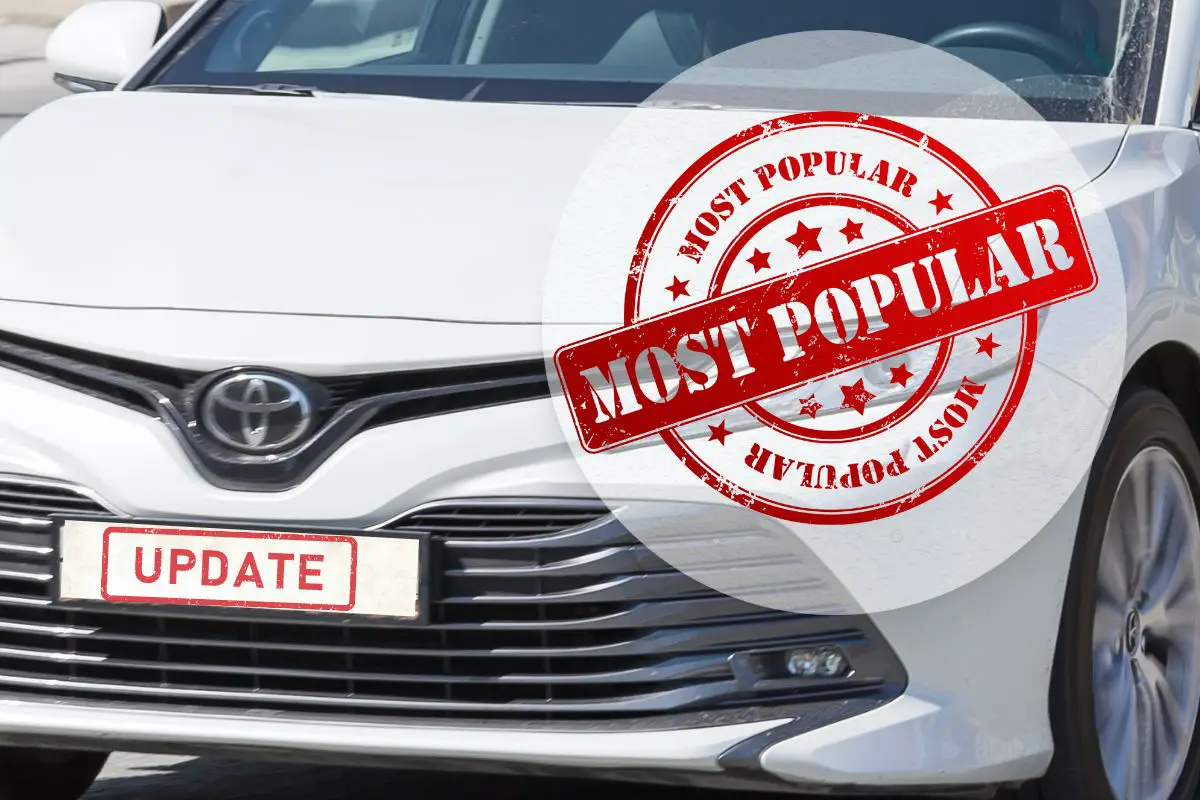
Among the changes the H2-powered fuel cell car include the addition of the Beyond Zero badge.
Toyota’s 2024 lineup includes a broad spectrum of different types of vehicles, including its one hydrogen car, the Mirai, and this year’s model has been given a number of updates, one of which is small but visible, as it is the same Beyond Zero badge that is seen on its Prius.The automaker’s fuel cell vehicle went through several upgrades to boost competition in its little market.
The hydrogen car market may not be huge at the moment, but some predict that it has the opportunity to take off in coming years. Establishing a presence early, putting miles on the road and introducing upgrades based on what has been learned can help to make a considerable difference in defining who will lead that market as it grows. In this light, Toyota has kept its Mirai in its vehicle lineup despite the tiny sales it sees every year. It worked a number of notable changes into the second-generation model of the vehicle, and for 2024, it is making a number of changes it hopes will boost the appeal of this H2-powered passenger vehicle. To start, the circular blue Beyond Zero emblem has been added to the Mirai for the first time. It was initially added to the Prius in 2023, but Toyota has been adding it to its newest electric and hybrid vehicles, including the Grand Highlander Hybrid Max. Now, it is also displayed on the Mirai, next to which are the letters FCEV (which stands for Fuel Cell Electric Vehicle).On top of the new badge, the Mirai hydrogen car is now also available in a new Elemental Silver color.
Beyond the Mirai’s outer appearance, it now also has the complete Toyota Safety Sense 3.0 suite. That suite includes a spectrum of driver assistance features such as automatic high beams, adaptive cruise control, pedestrian detection, and pre-collision emergency braking. [caption id="attachment_62745" align="aligncenter" width="1200"]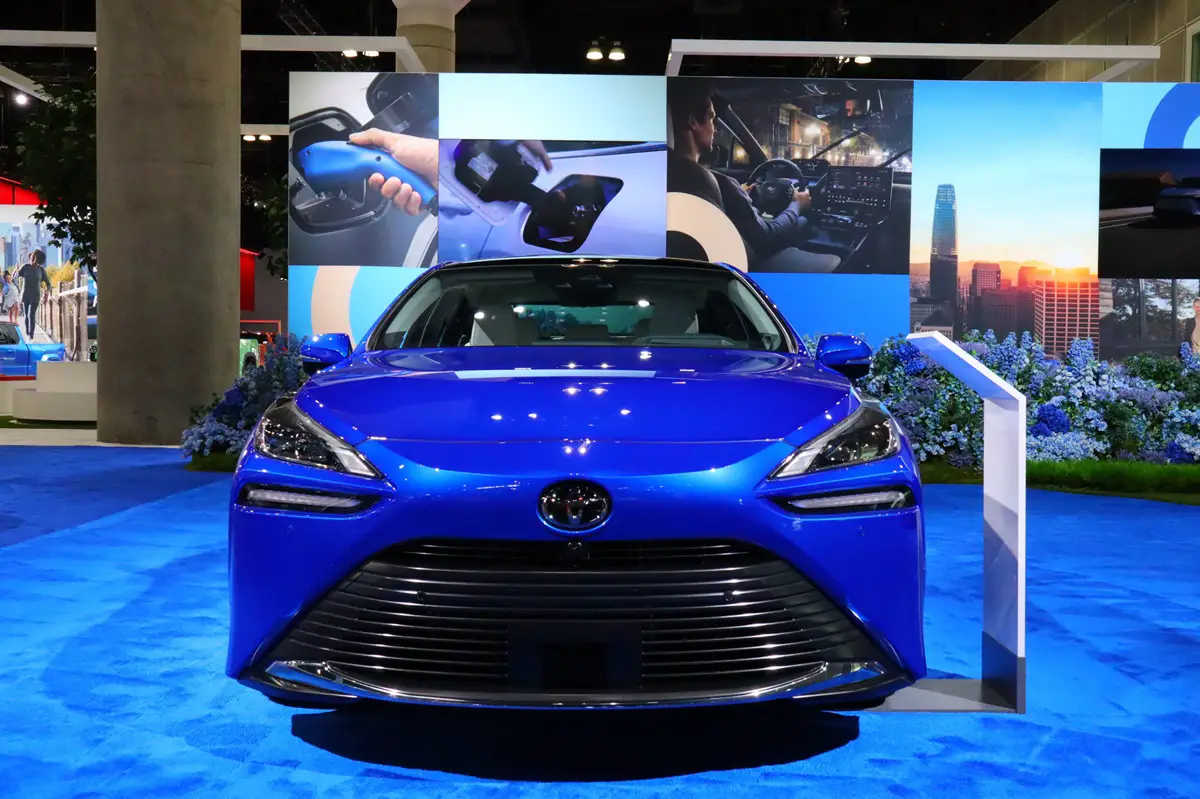 Image from depositphotos.com[/caption]
The fuel cell that powers the Mirai electric motor remains the same, as do the rest of the mechanical functions of this hydrogen car. It features a 182-horsepower motor for the vehicle’s rear wheel drive. It reaches 60 miles per hour in 9.1 seconds, which isn’t all that brag worthy when compared to conventional internal combustion engine vehicles, but the base Mirai XLE model can travel as far as 402 miles on a single tank of H2, which is solid.
The fancier Limited trim Mirai has a shorter range at 357 miles, which is still good, but not nearly as impressive as the range of the base model. Still, Toyota makes it much more worth it to those willing to be early adopters of its hydrogen car, by providing $15,000 worth of H2 to those who purchase the Mirai.
The price of the base model is slightly more expensive in 2024, at $51,215. Similarly, the Limited version is a touch more expensive than it was last year, with its price tag landing on $68,180.
Image from depositphotos.com[/caption]
The fuel cell that powers the Mirai electric motor remains the same, as do the rest of the mechanical functions of this hydrogen car. It features a 182-horsepower motor for the vehicle’s rear wheel drive. It reaches 60 miles per hour in 9.1 seconds, which isn’t all that brag worthy when compared to conventional internal combustion engine vehicles, but the base Mirai XLE model can travel as far as 402 miles on a single tank of H2, which is solid.
The fancier Limited trim Mirai has a shorter range at 357 miles, which is still good, but not nearly as impressive as the range of the base model. Still, Toyota makes it much more worth it to those willing to be early adopters of its hydrogen car, by providing $15,000 worth of H2 to those who purchase the Mirai.
The price of the base model is slightly more expensive in 2024, at $51,215. Similarly, the Limited version is a touch more expensive than it was last year, with its price tag landing on $68,180.
Will minor changes make a big impact?
When all is said and done, the changes to the 2024 Mirai aren’t tremendous. That said, these enhancements add polish to a vehicle that already underwent considerable changes when it launched as a second generation in 2021. At this point, it already has a great deal to offer those who are interested in being early adopters of a hydrogen car. Moreover, for drivers in the United States, the competition isn’t exactly fierce. There are only two hydrogen cars available for those interested in giving a fuel cell vehicle a try. Moreover, both the Mirai and its rival, the Hyundai Nexo, are exclusively sold in California. In 2023, there were 2737 Mirais sold, and while that number isn’t big, it represented a 31 percent increase over the figure from 2022. As for the competition, the Nexo sold 241 units, which was a considerable 41 percent plummet from its 2022 sales figures.Hydrogen car competition will be increasing very soon.
While there are currently only two hydrogen car models to speak of, that situation will soon be changing. Other automakers see the potential in this market and are looking to establish themselves within it. In fact, in 2024, Honda will be launching a fuel cell version of its highly popular CR-V crossover. That hydrogen car will be built in Ohio at the Performance Manufacturing Center where the Acura NSX used to be made. In an announcement from Honda in 2023, the company said that the new fuel cell system costs a third of what it cost to produce the fuel cell for its retired Clarity model. Recently, General Motors and Honda announced a joint venture in which they are building fuel cell systems in Michigan, showing that automakers are pushing ahead in the hydrogen car market and Toyota won’t have long with such tiny competition in this area. Ready to test your knowledge on the most abundant element in the universe? Take our fun and engaging Hydrogen Quiz now! [forminator_quiz id="58712"]How was this article?
Thanks for the feedback!