German Council Revises Hydrogen Production Forecast, Pushes Ramp-Up to Early 2030s
Germany’s National Hydrogen Council has updated its hydrogen demand forecast, projecting 275–555 TWh by the late 2040s but pushing the market ramp-up to the early 2030s due to geopolitical and policy uncertainties. It highlights steel, chemicals, power, heating, and transport as key demand sectors and calls for targeted support and streamlined permitting.
You know, it’s pretty fascinating to see how even the most ambitious energy plans can get flipped upside down by factors beyond the lab. That’s the case for Germany’s National Hydrogen Council, which just rolled out its latest projections this month. Hydrogen is still seen as a key player in the country’s strategy to cut carbon emissions, but the timing has hit a snag. Instead of seeing a boom in the late 2020s, it looks like the real action will kick in during the early 2030s. But don’t let this timing shake your faith—by the late 2040s, the total demand for hydrogen and its derivatives is still expected to reach between 275 and 555 TWh per year, which translates to about 8.25 to 16.65 million tonnes. So while the pace is slower, the long-term outlook is still bright. The conversation is now focusing on how we can practically build a sustainable hydrogen economy.
Delayed Ramp-Up, Steady Demand
Remember when everyone was betting on large-scale electrolysis facilities churning out hydrogen as Germany ramped up its renewable energy game by the end of this decade? Well, it looks like that’s going to take a little longer than expected. Factors like rising costs, sluggish permitting processes, and coordination headaches are all playing a part in slowing down the growth curve. But here’s the good news—the long-term vision is still very much alive. According to the council, even though things are moving a bit slower, hydrogen is going to play a critical role in industry, energy production, heating, and transport. Industries like steel and chemicals, which have been sticking to fossil fuels for ages, are expected to drive most of the demand, with power generation and heavy transport like trucks and ships following closely behind. Now, the real question isn’t whether hydrogen will be vital but rather how Germany can make this gradual journey happen.
Driving Forces Behind the Update
When forecasts change, it’s usually because the winds have shifted beyond what's happening in the lab. For Germany, there are three big factors to keep in mind: geopolitical tensions, uncertainty in key partner markets, and evolving priorities on the home front. The recent energy security crisis made Europe rethink who it can rely on, adding urgency and some caution to plans for imports and infrastructure. Meanwhile, changes in U.S. industrial and climate policy have stirred up new questions around partnerships and funding. And not to forget, budget constraints and fresh political agendas have delayed some subsidy programs and pipeline projects at home. All these factors led the council to conclude that a tempered ramp-up isn’t a sign of retreat; it’s just about aligning lofty goals with the messy realities of permitting and financing.
Sectors Poised for Hydrogen
Germany’s potential for hydrogen really shines when it comes to cleaning up those tough-to-abate sectors. In industrial areas from North Rhine-Westphalia to Lower Saxony and Hamburg, steelmakers and chemical plants are charting out pathways to switch from traditional methods to hydrogen-based processes. In the energy sector, hydrogen-powered turbines and fuel cells are being tested for backup power, helping support hydrogen storage while balancing the fluctuating outputs of wind and solar energy. Even district heating systems, which have typically relied on gas, are looking into how they can blend or completely switch to hydrogen to cut emissions in cities. And on the transport side, heavy-duty fleets and shipping companies are eyeing hydrogen fuel cells and ammonia as real contenders to replace diesel. These multiple use cases underscore why the council is still holding out hope for high demand long-term, even if those first deliveries take a bit longer.
Bridging the Gap with Technology
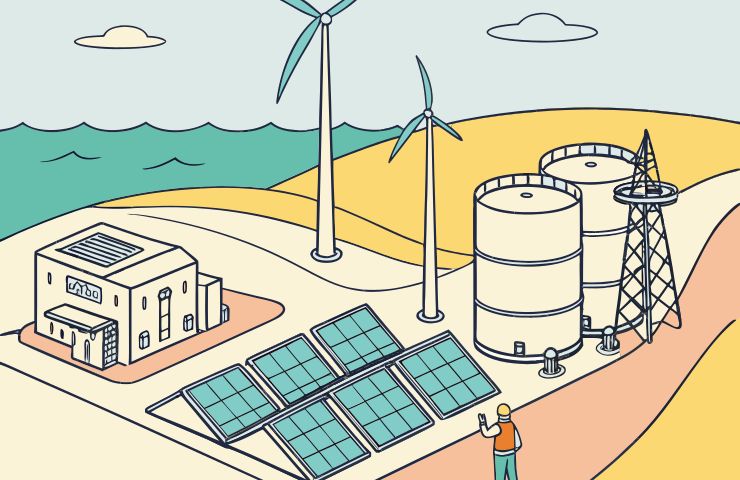
To meet this rising demand, Germany is banking on both green hydrogen and low-carbon hydrogen. Green hydrogen is produced by splitting water with electrolyzers powered by renewable sources like wind, solar, or hydropower—definitely the preferred option that boasts minimal emissions. There are big plans for large-scale PEM and alkaline electrolyser projects near ports and renewable parks, tapping into offshore wind and solar energy. Meanwhile, low-carbon hydrogen—often referred to as blue hydrogen—can fill in the gaps. This kind can be generated by reforming natural gas with carbon capture and storage, which means we can start producing or importing some early volumes and gradually transition until electrolyser capacities and renewable energy ramp up. Plus, for those long-haul or hard-to-electrify sectors, hydrogen derivatives like ammonia, methanol, and synthetic e-fuels add flexibility for storage and transport, connecting Germany’s demand hotspots with overseas suppliers rich in renewables. This mix of technologies is crucial to realistically achieving that target of 275–555 TWh of hydrogen use.
Policy and Infrastructure: The Next Battleground
But here’s the thing: all the engineering breakthroughs in the world won’t unlock the hydrogen future without some solid policy moves. Policymakers need to pull together a series of regulations, subsidies, and standards to minimize risks and speed up building hydrogen infrastructure. The council’s suggestions highlight the importance of targeted support measures like contracts for difference or government-backed guarantees to help close those early cost gaps. They’re also calling for a streamlined permitting process for pipelines, import terminals, and storage—issues that have held up more than a few pilot projects. On an international note, clarity around the EU’s rules on renewable fuels of non-biological origin (RFNBO) is essential, as this will dictate which imports can expect incentives and market access. As both domestic and international investors look at hydrogen corridors, consistent policy messages are crucial to securing funding and agreements. To sum it up, the next few years will be just as much about rewriting regulations as they will be about laying down infrastructure.
For businesses involved in this sector, this updated timeline is a bit of a mixed bag. On one side, it helps to dial back the risk of rushing into the market under uncertain conditions. On the flip side, it opens up more time for R&D and cost-cutting measures—potentially lowering the costs of hydrogen production, transport, and storage before things really take off. It also highlights how important it is to forge international partnerships, whether that’s through joint projects on North Sea electrolysis, shared import terminals with nearby nations, or collaborative efforts around standard agreements. So, the council’s forecast doesn’t just map out future demand; it’s also laying down a path for teamwork, innovation, and a gradual scale-up throughout the hydrogen supply chain.
A Look Ahead
So, what’s next? With Germany still committed to reaching climate neutrality by 2045, every little shift in the hydrogen timeline is significant. The revamped National Hydrogen Council, now laser-focused on market ramp-up, is going to be a key indicator of government priorities and how confident investors feel. Keep an eye on how quickly they roll out electrolyser capacity tenders, the progress on pipeline and import terminal permits, and the first blue hydrogen contracts. As pilot projects transition into full-scale operations, the cost trajectories for electrolysers, carbon capture, and e-fuel production will reveal whether the early 2030s hype can hold up. Crucially, watch how German and EU policies evolve to strike that perfect balance between hitting climate targets and staying competitive economically. In a field where momentum and patience must go hand in hand, the council’s measured outlook serves as a reminder that building a hydrogen economy isn’t a sprint; it’s a marathon.