Hydrogen infrastructure news: KIT launches Hydrogen Integration Platform to accelerate green hydrogen production
KIT’s Hydrogen Integration Platform unites electrolysis, liquefaction, storage, and transport under one roof to accelerate green hydrogen infrastructure.
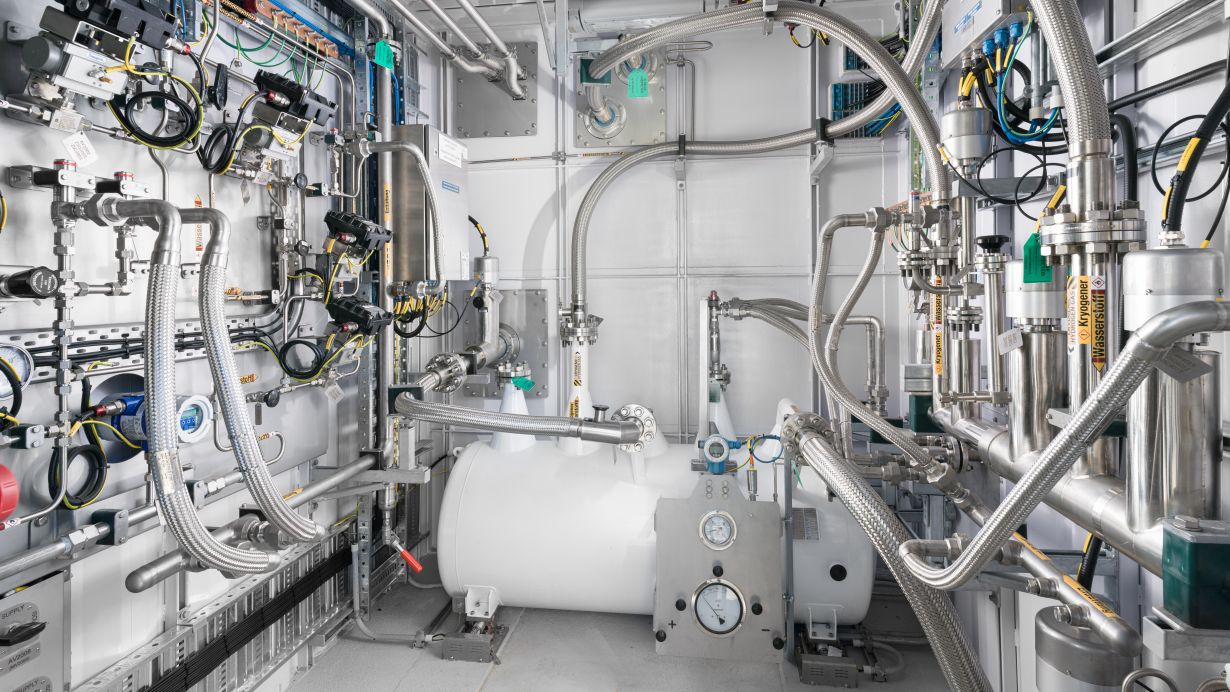
The Karlsruhe Institute of Technology (KIT) has kicked off an exciting new project with its Hydrogen Integration Platform (HIP) at the Energy Lab on Campus Nord. This initiative is all about creating a state-of-the-art research facility dedicated to green hydrogen production and integration. It's perfectly aligned with both national and European goals aimed at achieving climate neutrality. The vision? To bring together every aspect of the hydrogen value chain—from making hydrogen and liquefying it to storing, transporting, and ultimately using it—all under one roof. It’s a simple yet game-changing idea: by examining hydrogen technologies in real-world conditions, researchers can tackle genuine challenges and speed up the rollout of scalable, clean energy solutions.
Connecting the hydrogen value chain
HIP is like a one-stop shop for hydrogen innovation, featuring several demonstration modules all in one place. It all kicks off with hydrogen production through electrolyzers that separate water into hydrogen and oxygen using renewable electricity. The produced hydrogen then smoothly travels into a cryogenic liquefaction system that can pump out 50 kilograms of liquid hydrogen each day, according to KIT. Once it's liquefied, the hydrogen gets stored in insulated tanks and sent through pipelines to various applications. This integrated setup lets researchers closely monitor interactions, track energy losses, and fine-tune system performance in ways that standalone lab experiments just can’t match.
The electrolyzers at HIP are pretty versatile—they can adjust their output to match the availability of renewable energy. This means researchers can dig deep into how to align hydrogen production with fluctuations in solar and wind energy. They're tapping into real-time data from grid simulators that feed directly into the electrolyzer controls, allowing the team to test demand-response strategies and evaluate grid stability under various operating conditions. This level of integration helps them uncover operation flexibilities and refine dispatch planning for large-scale green hydrogen production.
From electrolytic hydrogen to cryogenic storage
Hydrogen liquefaction isn’t just about cooling the gas; it involves a complex process where the gas is cooled through various heat exchangers and expansion phases until it turns into liquid at around 20 kelvin. At HIP, they’re not just testing for efficiency and boil-off through real-world conditions; they’re also creating a cryogenic environment for superconducting components. This blend of liquefaction and superconductivity research is key to boosting energy density and minimizing losses across the hydrogen supply chain.
When it comes to safety and operational reliability, HIP is leaving no stone unturned. The liquefaction plant is designed with multiple heat exchanger stages, high-efficiency compressors, and automated safety valves to manage pressure and temperature. Researchers can manipulate throughput and test different start-stop cycles to see how boil-off rates and energy consumption fluctuate, generating detailed performance maps that can help shape future commercial plants.
Hybrid energy pipelines and superconducting synergy
A standout feature of HIP is its upcoming hybrid energy pipeline test track. This clever setup involves a thermally insulated line that carries liquid hydrogen at cryogenic temperatures while simultaneously running superconducting power cables that transmit electricity efficiently. Think of it as a dual-purpose energy highway that could transport massive volumes of renewable energy from generation sites or import terminals directly to industrial zones or transportation hubs. Professorin Tabea Arndt from KIT’s Institute of Technical Physics believes these hybrid pipelines could play a vital role in tomorrow’s hydrogen economy, seamlessly linking supply, industry, and transport.
By locating superconducting cables alongside the cryogenic hydrogen line, HIP researchers can accurately measure thermal interactions and develop control strategies to balance both types of energy transport. Potential applications range from moving renewable energy from offshore wind farms to coastal industrial sites, to supplying combined power and hydrogen to transportation hubs. The initial tests aim to set safety protocols for emergency shutdowns, leakage detection, and maintaining superconductivity when faced with real-world mechanical pressures.
Solving real-world problems for industry and mobility
But HIP isn’t just about infrastructure; it also facilitates sector coupling by integrating hardware-in-the-loop simulations and testing stations. Professor Giovanni De Carne, the future director of HIP, points out that this facility will enable rigorous testing of hydrogen propulsion systems, especially for rail transport and larger applications, all under realistic load profiles. By bringing together power-to-gas, cryogenic storage, and sector-specific demands, this platform gives industry partners a golden opportunity to validate designs, control strategies, and safety protocols before they roll out on a larger scale.
Digital simulation and sector coupling
Underpinning all this hands-on experimentation is KIT’s Energy Lab digital twin environment. By linking physical components—like electrolyzers, pipelines, and storage tanks—with both software-in-the-loop and hardware-in-the-loop simulations, researchers can replicate future electricity market signals, grid disruptions, and varying industrial demand scenarios. This innovative approach enables them to assess how hydrogen assets interact with power grids and other energy carriers, refining control algorithms that boost reliability, efficiency, and cost-effectiveness in a multi-carrier energy system.
Local growth and tapping into regional expertise
Here's the best part: this initiative is about fostering local growth and making the most of regional expertise. It’s built on Germany's engineering tradition and KIT’s strong research reputation, reinforcing collaboration with nearby industries and academic institutions. By making access to its facilities more affordable, HIP breaks down financial and technical barriers for small and medium enterprises, creating fresh opportunities for new service providers, spin-offs, and skilled jobs right in the Karlsruhe area. Local firms specializing in things like cryogenics, pipeline engineering, and safety systems will have a platform to offer testing and prototyping services, nurturing a new hub of expertise within Karlsruhe’s tech ecosystem.
Driving environmental and regulatory progress
When it comes to environmental impact, HIP is taking the reins by measuring energy efficiencies, boil-off losses, and emissions throughout the hydrogen chain. The insights gleaned here not only help in minimizing the sector’s carbon footprint but also contribute to the establishment of standards and safety regulations for liquefaction plants, cryogenic pipelines, and hybrid energy corridors. This is crucial for reducing uncertainties for policymakers, speeding up permitting processes, and laying the groundwork for funding schemes that target the most effective and robust hydrogen infrastructure designs.
All these efforts make HIP a cornerstone project in the realm of clean hydrogen news and hydrogen energy news. As the world pushes for scalable solutions to cut down emissions in industry, transport, and energy production, integrated research platforms like this one are going to be essential in smoothing the path for innovative technologies and paving the way toward a sustainable, hydrogen-powered future.