Hydrogen Energy News: Plug Power Reports Preliminary Cash Usage Decline and Names PEM Industrialization Lead
Plug Power reported preliminary Q3 net cash usage of approximately $28 million and appointed Dr. Lee Sweetland to lead PEM stack industrialization ahead of its early November earnings call.
In a Form 8-K filed with the U.S. Securities and Exchange Commission earlier this month, Plug Power Inc. reported that it used approximately $28 million in net cash during the third quarter and ended the period with roughly $134 million in cash and cash equivalents, excluding restricted cash, according to the filing.
The company emphasized that those figures are preliminary and unaudited, warning they could change after quarter-end closing procedures and accounting review. Plug Power also noted it did not receive proceeds from its “at-the-market” equity program or from new debt during the quarter.
An independent financial-news report noted that this preliminary net cash usage figure represents a sequential decline from prior quarters, suggesting early signs of tighter capital discipline, though the outlet cautioned that accounting finalization could alter the picture.
Analysts at the same outlet observed that prior to this quarter, Plug Power’s net cash usage was higher, making the preliminary $28 million figure a potential sign of operational leverage improvement, although full audited results are still pending, the outlet said.
Liquidity management has become a key concern for hydrogen infrastructure providers as they build out capital-intensive electrolyzer and fuel-cell systems. Investors will watch to see whether this reported reduction in net cash usage represents lasting operational efficiency or simply reflects quarter-end shifts in collections, supplier terms and inventory, Plug Power said.
Investors and credit analysts also track the concentration of cash outflows across growth and working-capital items. In Plug Power’s case, capex for factory build-out, R&D spending and inventory buildup for large electrolyzer orders can drive uneven cash consumption from quarter to quarter, according to the company’s disclosure.
The formal earnings call for the quarter is slated for early November, giving analysts the first opportunity to compare audited results against preliminary estimates and to probe operating cash flow, working-capital movements and margin performance.
In a separate release, Plug Power said it has appointed Dr. Lee Sweetland as Global Engineering Industrialization Lead. According to the announcement, he will spearhead efforts to turn the company’s proton-exchange-membrane (PEM) stack technology into repeatable, high-volume products.
Plug Power described Dr. Sweetland as a former Chief Operating Officer of Ballard Power Systems, where he spent eight years in transformation and advanced manufacturing roles. Earlier in his career, he held senior manufacturing and operations positions in Johnson Matthey’s fuel-cell business, the company said.
The appointment reflects a desire to import industrialization expertise from the fuel-cell sector into the electrolyzer business. PEM stacks are at the heart of Plug Power’s GenEco electrolyzer systems, which the company associates with projects in ammonia synthesis, e-fuels production and industrial hydrogen, according to its investor materials.
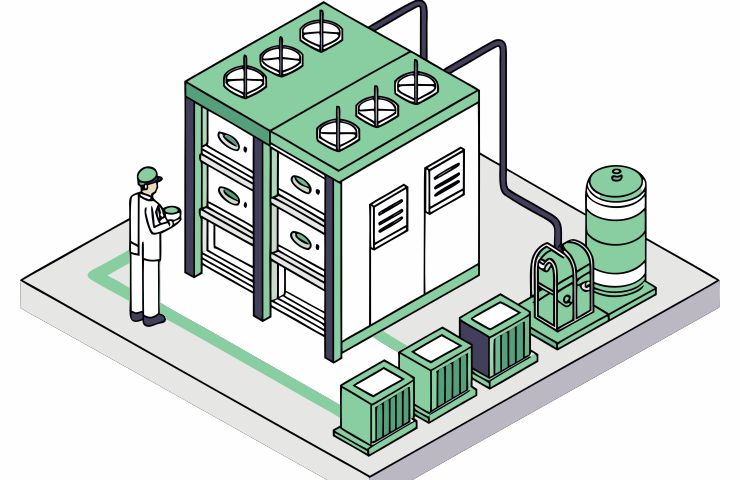
GenEco electrolyzers process water and electricity into hydrogen and oxygen by assembling multiple PEM cells into stacks, integrating power electronics, water treatment, cooling and control systems. Standardizing components, automating assembly and optimizing catalyst loadings can improve yield, reduce costs and boost reliability, Plug Power noted.
In its investor presentation, Plug Power cites a global pipeline of electrolyzer opportunities in Europe, North America, Australia and New Zealand with equipment ratings ranging from 25 MW to 280 MW. However, announced project capacities differ from contracted orders and actual production volumes, the materials emphasize.
That pipeline includes announced capacities of 25 MW, 50 MW, 100 MW and up to 280 MW in single projects, according to the presentation, though those ratings reflect equipment or project scope rather than confirmed hydrogen production volumes or contracted revenue.
Financial and Strategic Implications
Hydrogen and fuel-cell providers often rely on project-specific financing, government incentives and joint ventures to fund capital outlays. The absence of new equity or debt proceeds during the quarter suggests Plug Power tightened expense control, but its long-term cash runway will depend on project milestones and customer deposits, according to analysts.
Beyond project financing, hydrogen firms must navigate permitting, electricity tariffs and evolving definitions of renewable hydrogen. Delays in interconnection or offtake agreements can stretch construction timelines and increase pre-commissioning expenditures, elevating cash usage before revenue recognition.
Plug Power traces its origins to the late 1990s, when it was organized in Delaware and shortly thereafter listed on Nasdaq, according to company filings. It initially focused on PEM fuel-cell systems for material-handling equipment before expanding into a full hydrogen ecosystem encompassing electrolyzers, production, storage, delivery and fueling infrastructure.
The company reports it has deployed electrolyzers on five continents, more than 76,000 fuel-cell systems and 280 fueling stations. Those figures illustrate the scale of its installed base but are company-reported and not independently verified.
Scaling PEM Stack Manufacturing
At the core of both PEM fuel cells and electrolyzers lies a polymer membrane that conducts protons while forcing electrons through an external circuit. In fuel cells, hydrogen and oxygen generate electricity; in electrolyzers, electricity splits water back into its constituents.
Industrializing those stacks requires converting lab-scale prototypes into repeatable assembly processes. That means standardizing gasket materials, catalyst coatings and compression force, automating cell stacking, implementing inline testing and ensuring consistent membrane hydration and gas purity.
Ballard Power Systems has long operated pilot and high-volume PEM stack lines for heavy-duty mobility applications; by recruiting a veteran from that environment, Plug Power appears to signal its intent to apply similar manufacturing rigor to electrolyzer stacks without formal partnership, the company stressed.
At its Rochester Gigafactory, described as central to next-generation PEM stack manufacturing, Plug Power has invested in automated welding, coating lines and test stands. Dr. Sweetland’s remit will likely include optimizing those systems to meet internal cycle-time targets and reduce rework.
Looking Ahead to Early November
The upcoming earnings call will serve as a checkpoint for Plug Power’s narrative of improved cash discipline and enhanced manufacturing execution. If finalized net cash usage aligns with $28 million and operating cash flow shows further improvement, the company may bolster investor confidence.
Conversely, divergence between preliminary and audited figures could prompt renewed scrutiny. Likewise, any early indicators of better PEM stack yields or cost reductions under the new industrialization lead would strengthen the case that Plug Power’s production processes are maturing.
Investors also track the concentration of cash outflows across growth and working-capital items. In Plug Power’s case, capex for factory build-out, R&D spending and inventory buildup for large electrolyzer orders can drive uneven cash consumption from quarter to quarter, per the filing.
Beyond the quarterly results, Plug Power’s digital symposium later in the month will offer deeper dives into technical roadmaps, project updates and partner collaborations, according to its events calendar. Those sessions could shed light on pipeline maturation and schedule risk.
In an industry where project backlogs routinely outpace billing milestones, managing the rhythm of cash outflows and industrial ramp-up is as critical as securing engineering breakthroughs, investors say.
As the sector matures, the ability to deliver equipment on schedule, secure reliable component supply and maintain healthy liquidity will distinguish frontrunners from those who struggle with repeated cash calls. Plug Power’s dual focus on cash discipline and manufacturing scale-up illustrates the high-stakes balancing act at the heart of the green hydrogen economy.