Germany Funds Modular Hydrogen Fuel-Cell Propulsion for Ultralight Aircraft
Germany’s LuFo Klima program backs THWS and Kasaero with nearly €2 million to develop a modular hydrogen fuel-cell propulsion kit for the Taifun 17 H₂, aiming retrofit-ready ultralight aircraft.
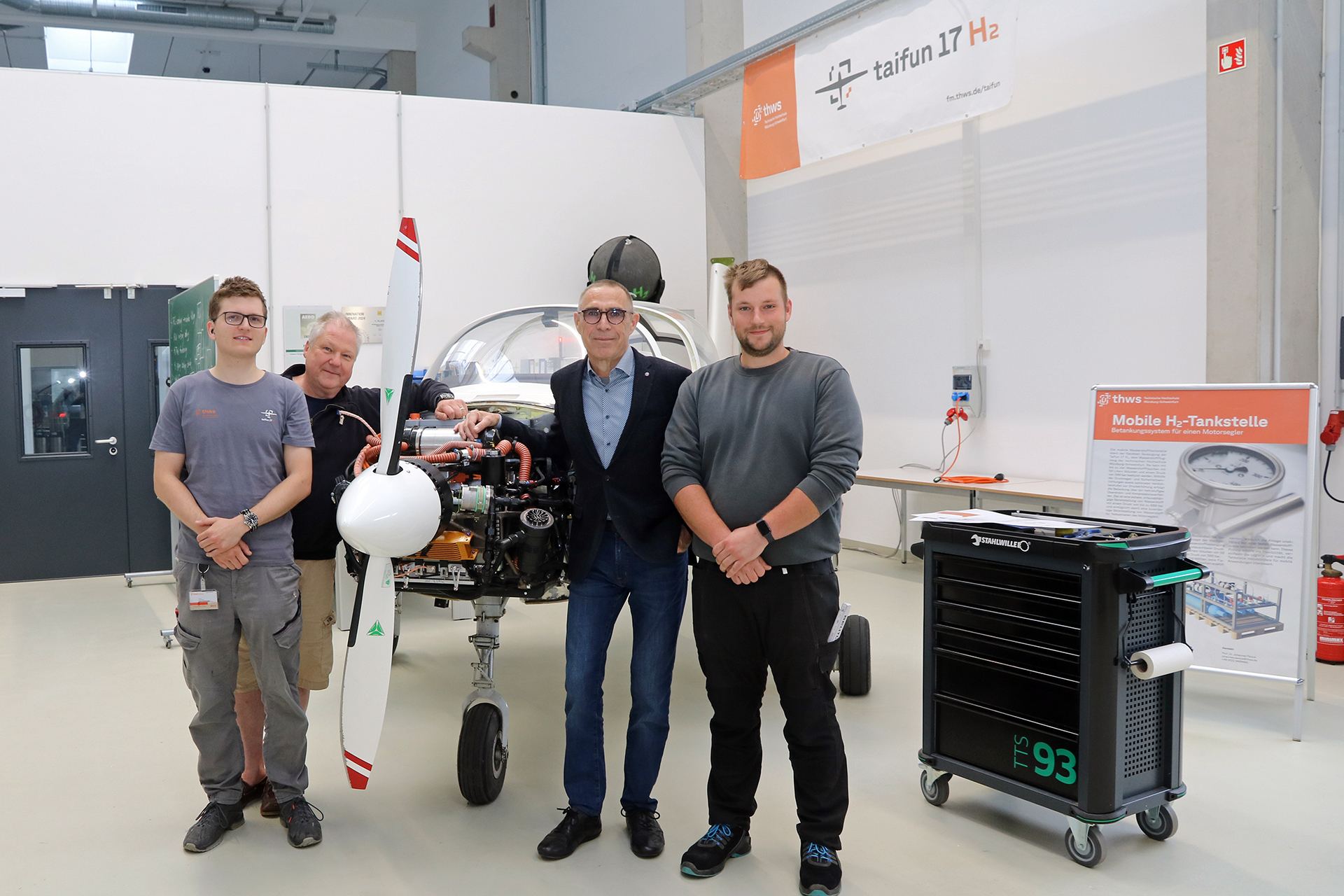
Don’t let the word “demonstrator” fool you into thinking this is just some lab experiment. Germany is getting serious about hydrogen aviation, recently approving nearly €2 million in federal funding for a modular, retrofit-friendly fuel-cell system designed for ultralight aircraft. This move shows how committed Berlin is to boosting hydrogen production and storage as part of its plan for climate-neutral aviation. By combining PEM fuel cell technology with a lithium-ion buffer, they’re making a significant step forward in the world of green hydrogen and sustainable air transport.
The star of the show is the Taifun 17 H₂, a two-seat touring motor glider developed under the HyFly initiative, built on the classic Valentin Taifun 17E airframe. Technische Hochschule Würzburg-Schweinfurt (THWS) is at the helm of the engineering effort, while Kasaero GmbH contributes its expertise in aerospace certification and lightweight designs. They’re breaking down the propulsion system—fuel cell, battery, power electronics, motor, and tanks—into plug-and-play modules specifically for ultralight planes.
The funding comes from LuFo Klima, Germany’s federal aviation research program managed by the Bundesministerium für Wirtschaft und Energie. With the total funding close to €2 million, about €890,000 goes to THWS. It’s not just financial support; it signals that hydrogen fuel cells are still a major focus along with battery-electric alternatives in the quest for zero-emission air travel.
What It Means
Here’s the lowdown:
How the Tech Works
At the heart of it all is a proton exchange membrane (PEM) fuel cell that takes compressed gaseous hydrogen and transforms it into electrical power. A high-performance lithium-ion buffer battery kicks in during takeoffs, climbs, and moments when power demand spikes. Both power sources feed into an electric motor that drives a propeller designed for quiet, efficient cruising.
THWS and Kasaero aim to make each component modular with standardized interfaces. Quick-connect couplings handle high-pressure hydrogen lines, and easy-to-use wiring harnesses connect the fuel cell, battery, controller, and motor. This modular vibe mirrors what we see in the automotive world, where manufacturers can swap out powertrains across various platforms, speeding up development times.
This design avoids the headaches of cryogenics by using compressed gaseous hydrogen under moderate pressures, striking a balance between safety and weight. The system is designed to deliver around 50 kW of continuous fuel-cell output—plenty for two-seat operations while falling within ultralight performance limits. They’ve cleverly packaged tanks and fuel lines to fit snugly into existing spaces in the Taifun airframe.
By treating the hydrogen fuel cell like a transportable unit, the team hopes to eliminate the need for customized cowling, overly complex structural reinforcements, and the lengthy documentation usually needed for one-of-a-kind propulsion systems.
Strategic Stakes
Battery-electric aircraft often struggle when it comes to flight range and payload. Energy density is a big issue. Hydrogen fuel cells can offer better weight-to-energy ratios, but they bring their own challenges with integration—think tanks, safety valves, leak sensors, thermal management, and certification processes. Having a modular kit could make it easier for flight schools, aero clubs, and private owners to upgrade from traditional gas engines without the expense of new aircraft.
If THWS and Kasaero can pull off a certified package, operators could get their hands on retrofitting kits similar to what vintage car enthusiasts do. This could create a whole new service market for retrofit specialists, hydrogen refueling stations, and maintenance providers. Standardizing connections and interfaces is crucial here—getting mismatched fittings or cabling wrong could blow certification budgets before they even get off the ground.
Regulatory and Market Hurdles
Even with slick modular designs, getting approval won’t be straightforward. Germany’s Luftfahrt-Bundesamt is going to want thorough data on everything from hydrogen tank crash behavior to electrical fault tolerance and emergency venting systems. THWS mentions that the Taifun 17 H₂ is “flight capable,” but they’re still waiting on a provisional permit. Plus, many regional airports don’t yet have reliable hydrogen refueling stations. Without solid hydrogen infrastructure in place, operators might hesitate to adopt these new systems, even with the promise of zero emissions.
The supply chain for green hydrogen—produced through renewable-powered water electrolysis—is gathering momentum but isn’t quite there yet in Bavaria. Transportation and storage costs could drive up fuel prices, eating away at the environmental advantages. Any delays in getting certifications could risk making the technology obsolete: next-gen battery packs and synthetic fuels are competing for the same market.
Context and Competition
When it comes to hydrogen aviation, Europe has seen projects like the DLR-supported HY4 demonstrator and regional cargo drones, most of which rely on tailored airframes. THWS’s shift towards modularity is a strategic game changer—this time, they’re treating fuel cells as a standard product rather than a custom fit. This approach could shorten time to market and widen their potential customer base.
Global competitors—from American startups to research hubs in Japan—are exploring fuel-cell planes, but few are focusing on the retrofit angle. The modular kit idea mirrors the standard battery pack business in electric cars, which could allow for economies of scale if there’s a good cluster of approved interfaces.
Behind the Scenes in Schweinfurt
At THWS’s Wasserstoff-Technikum labs in Schweinfurt, the team, led by Prof. Dr. Johannes Paulus, knows a thing or two about hydrogen research. Since early 2022, they’ve been fine-tuning the PEM stack layout through several test campaigns in specialized high-pressure cells. Kasaero’s vibration and thermal experts stress-test the modules under simulated flight conditions, ensuring each piece can endure temperature variations, vibrations, and G-forces without needing a custom airframe mount.
The lab itself is equipped with a hydrogen infrastructure that includes gas analyzers for detecting leaks, burst valves, and a hangar designed for ground runs that mimic the actual flight profiles. Every connection—from tank-mounting rails to electrical links—is tested to ensure they can be installed within an hour, a pace the team believes will attract busy operators looking for quick retrofitting options.
The Maverick Take
Sure, the funding announcements sound great. But let's be real—talk is cheap if you don’t have a certified aircraft ready at your airfield and a steady supply of green hydrogen nearby. The retrofitting idea is tempting, but remember: retrofitting in aviation isn’t always a plug-and-play situation. The actual costs for installation, training, and ongoing maintenance could dash any hopes for a smooth transition if operators face unexpected delays or safety checks.
Yet, if modularity turns out to be the key to expanding hydrogen use beyond mere demo models, then THWS and Kasaero could change the game. If they succeed in rolling out certified, off-the-shelf powertrains, battery-only advocates might need to rethink their value propositions. This project might not single-handedly decarbonize small aviation, but it could show that hydrogen fuel cell modules are more than just a flashy demo—they could turn into a viable market product.
Germany’s push for modular hydrogen propulsion in ultralight aircraft shines a light on a larger trend: hydrogen fuel cells are maturing into serious options. The big question now is whether clubs, schools, and private pilots will embrace the retrofitting dream when the bills start rolling in.