Enapter Secures First Saudi Order for 240 kW Multicore AEM Electrolyzer
Enapter AG’s Italian subsidiary has secured its first Saudi order for a 240 kW multicore AEM electrolyzer, marking its entry into the Kingdom’s industrial-gas market.
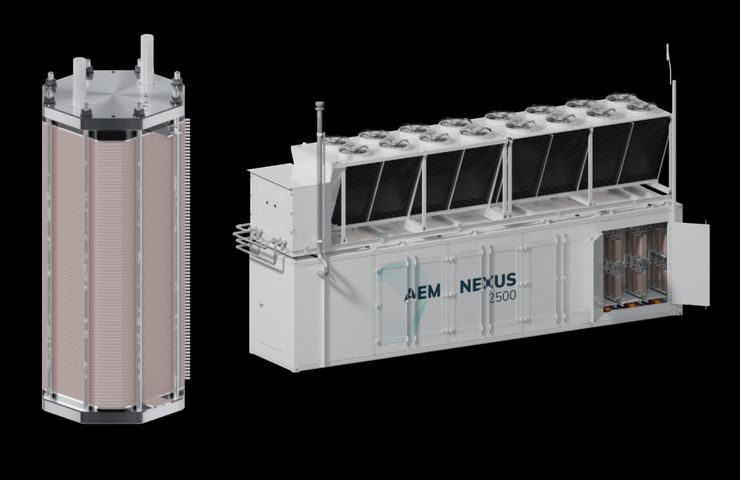
Enapter AG’s Italian subsidiary, Enapter S.r.l., has secured its first order in Saudi Arabia for a multicore-class anion exchange membrane electrolyzer system, according to a capital-market announcement by the company. The unnamed Saudi producer of specialty and industrial gases has placed an order valued at approximately EUR 0.5 million for a skid-mounted package that is designed to advance hydrogen production and contribute to regional hydrogen infrastructure development under the banner of clean hydrogen news.
Order details and technical specs
The order covers a 240 kW electrolyzer system that incorporates ten modular Stack 25 units, the announcement says. The system is designed to produce up to 50 standard cubic metres of hydrogen per hour at a purity of 99.999 percent, according to Enapter, and includes dedicated equipment to recover and purify oxygen as a co-product. Both gases are intended to be compressed to 200 bar and filled into cylinders for sale to industrial customers, the company indicates, making this an on-site production model rather than a captive supply arrangement.
Commissioning timeline
Enapter plans to deliver and install the electrolyzer in the customer’s production hall in Saudi Arabia, with commissioning scheduled for the first quarter of 2027, the company states. This projected timeline marks a transition from demonstration systems to an industrial deployment of green hydrogen production equipment, although the announcement does not specify the electricity source for the installation or whether it will qualify as green hydrogen under renewable-power criteria.
Company background and technology origins
Enapter S.r.l. is registered in Crespina Lorenzana in the province of Pisa in Italy, according to the company’s website, and handles technology development, manufacturing and commercial delivery of AEM electrolysis systems for the group. Enapter AG traces its AEM electrolysis technology to the Italian company ACTA, whose research on anion exchange membranes began in 2009, the company says. Enapter was founded in 2017 after acquiring ACTA’s patents, core technology and electrochemistry team, according to corporate history. Since then, Enapter has commercialized modular, stackable electrolyzers intended for applications ranging from small distributed systems to industrial and multi-megawatt installations, stating that over 12,000 of its AEM stacks are operating worldwide.
Strategic significance
This transaction represents Enapter’s market entry into Saudi Arabia’s industrial-gas sector, according to the company. It is described as the first multicore-class electrolyzer order for industrial use in the Kingdom, offering a reference point for modular AEM systems in a region with ambitions to expand hydrogen production and decentralized hydrogen infrastructure. Recovering and purifying oxygen as a saleable co-product may improve project economics and distinguishes the package from systems that vent oxygen or treat it as a by-product. Enapter also suggests this deployment could generate local service and maintenance activities, potentially creating jobs in the region.
Technology overview
Anion exchange membrane electrolysis, or AEM electrolysis, splits water into hydrogen at the cathode and oxygen at the anode using a polymer membrane that conducts negatively charged ions, academic reviews explain. Enapter’s design uses a dilute potassium-hydroxide electrolyte on the anodic side and individual control of each Stack 25 unit, enabling flexible output and redundancy. Stack 25 is rated at a nominal hydrogen output of 4.9 standard cubic metres per hour and a maximum power absorption of 24.4 kW per stack, according to product specifications on the company’s website.
Compared with alkaline electrolysis, AEM systems may use lower-cost catalysts and avoid the need for titanium corrosion protection, while offering some of the pressure capabilities and dynamic response of proton exchange membrane (PEM) systems, peer-reviewed studies note. However, AEM remains in earlier stages of commercialization, and questions remain about membrane ionic conductivity, catalyst activity and long-term durability, according to academic analyses.
Multicore design advantages
The multicore architecture combines several smaller stacks in parallel, which allows an operator to adjust production levels to match demand or electricity supply, Enapter indicates. It also offers maintenance benefits: individual stacks can be taken offline without halting overall hydrogen production. This modular approach aligns with distributed hydrogen production methods and could support decentralized hydrogen infrastructure projects, the company suggests.
Saudi market context
Saudi Arabia has pursued hydrogen as part of its Vision 2030 industrial-diversification agenda, and policy sources indicate growing initiatives such as the Saudi Green Initiative to support renewable energy and clean hydrogen programmes. There is no direct link between Enapter’s order and a specific government subsidy or procurement scheme. The transaction appears to be a private industrial deal within a broader environment that encourages investment in clean hydrogen and renewable energy.
Large-scale green-hydrogen and ammonia projects in Saudi Arabia—such as the NEOM Green Hydrogen Project in Oxagon—operate at the multi-gigawatt scale with different electrolyzer technologies and business models, project literature notes. Enapter’s single-package, 240 kW system represents a distributed approach to hydrogen production, distinct from those large centralized plants.
Water and power considerations
Water scarcity is a critical factor in Saudi Arabia, where electrolysis requires a reliable supply of purified water. The announcement does not disclose the water source or expected consumption, and it remains unclear whether desalinated water or treated groundwater will be used. Similarly, the electricity source has not been specified, so it cannot yet be determined if the system will operate with renewable power and produce green hydrogen according to established definitions.
Operational uncertainties
While the design specifications are promising, key performance metrics such as system uptime, energy efficiency, water consumption rates and long-term stack durability have not yet been independently verified. The actual purity levels of 99.999 percent for both hydrogen and oxygen are project specifications rather than confirmed test results, and there is no public independent verification of cylinder filling procedures, permits or offtake agreements. Academic and industry reviews of AEM technology note challenges around membrane conductivity, catalyst stability and scale-up.
Potential market impact
If the electrolyzer meets its design targets, it could provide a foothold for Enapter in a market where industrial customers increasingly seek on-site gas generation to reduce logistics costs and supply-chain complexity. Successfully marketing both hydrogen and oxygen may open new revenue streams for the unnamed gas producer and demonstrate the commercial viability of modular electrolyzer systems in the Middle East. It may also influence clean hydrogen project financing and offtake arrangements in regional industrial-gas markets.
Next steps and outlook
Commissioning in early 2027 will be a key milestone for Enapter’s hydrogen production strategy in the region, according to the company. Independent performance data—covering gas purity, energy use, maintenance intervals and cost metrics—will be crucial for evaluating the project’s success. Stakeholders will be watching operational data closely, especially energy consumption metrics and uptime figures, to compare AEM multicore systems against established alkaline and PEM electrolyzers. If Enapter’s system performs as designed, it may influence procurement decisions for decentralized clean hydrogen solutions across the Middle East, Europe and beyond.
Overall, the order marks a modest but strategic step for Enapter in Saudi Arabia, establishing a regional reference for AEM hydrogen production methods and supporting the emerging hydrogen infrastructure ecosystem.