e-methanol reactor powers major renewable methanol project in China
Carbon Recycling International and Tianying Group have delivered the world’s largest e-methanol reactor to China’s Liaoyuan project, aiming to produce 170,000 tonnes/year of renewable methanol from green hydrogen and captured CO₂.
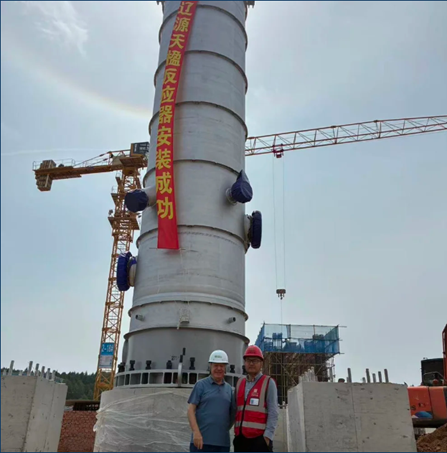
Carbon Recycling International and Tianying Group have decided to team up to create the world’s largest e-methanol reactor for the Liaoyuan eMethanol Project in Jilin Province, China. This partnership comes at a crucial time when the region is striving for cleaner energy solutions. The target? To produce about 170,000 tonnes of renewable methanol each year by intertwining green hydrogen with captured biogenic CO₂. Their main goal here is to showcase large-scale power-to-liquid technology, meeting the growing demand for low-carbon fuels in challenging industries.
For Carbon Recycling International, this project builds on their impressive history in CO₂-to-methanol technology, which kicked off with the George Olah Renewable Methanol Plant in Iceland and has since expanded to commercial facilities like the one in Anyang, Henan Province. As they mark a significant milestone in construction this month, it highlights how their proprietary Emissions-to-Liquids (ETL) systems have evolved from early-stage demonstrations to massive projects.
Partnering for progress
While Carbon Recycling International brings its expertise with ETL reactors to the table, Tianying Group lends its deep understanding of local project development and operations. Being a significant player in the industry, Tianying has a solid track record in managing chemical and energy assets across Jilin Province. Together, they're blending Icelandic technology with Chinese industrial prowess to drive renewable methanol production forward. This collaboration really shows how international teamwork can push local goals for non-fossil fuels and strengthen hydrogen infrastructure.
Powering e-methanol at scale
Here’s where it gets interesting: the process is straightforward yet effective. They use renewable electricity to break down water into hydrogen through electrolysis, capture CO₂ from both industrial and biogenic sources, and then send these gases into a methanol synthesis reactor. Inside that reactor, special catalysts kick off the exothermic hydrogenation of CO₂, all under precise pressure and temperature conditions. A nearly 70-meter distillation column then steps in to separate and purify the methanol product, recycling any unreacted gases back into the loop to maximize overall efficiency.
Before the CO₂ makes its way into the reactor, it’s captured from biogenic emissions—like fermentation off-gas or other biomass sources—and goes through several stages of cleaning via adsorption and distillation. This prep work ensures high-purity input that not only boosts catalyst performance but also keeps energy loss to a minimum. Plus, the water produced as a byproduct can either be treated or reused, making the system nearly circular and reducing waste.
This collaborative effort aims at tackling real-world issues such as industrial emissions and the pressing need for scalable green fuels. By transforming carbon emissions into a liquid energy carrier, e-methanol systems can significantly cut down greenhouse gas output in industries like shipping, aviation, and chemicals—sectors that traditionally find it tough to decarbonize with batteries or direct electrification.
Made in Iceland, made for China’s future
The reactor unit that’s been sent over to Liaoyuan is a hefty piece, weighing in as a skid-mounted module prepped for integration. It’s currently being set up on-site, making use of Jilin’s existing industrial framework to connect with CO₂ sources, hydrogen generators, and logistics networks. This method not only speeds up construction but also streamlines commissioning. Local suppliers are gearing up to provide necessary equipment, welding services, and labor, opening up fresh job opportunities in engineering, fabrication, and operations.
By establishing a green-fuel value chain in Liaoyuan City—a place that once thrived on coal mining and heavy industry—the project is diversifying the regional economy while demonstrating how renewable methanol can take advantage of existing petrochemical clusters. Provincial leaders see this initiative as a model for revitalizing the industry, suggesting that the anticipated job creation and supply chain growth will come hand in hand with the plant's start-up.
Environmental and economic benefits
At its heart, e-methanol production locks away carbon in a liquid form, offering a climate-edge—especially when the CO₂ comes from biogenic sources and the hydrogen is generated using renewable energy. Industry estimates suggest that a plant of this scale could capture upwards of 100,000 tonnes of CO₂ each year—equivalent to taking tens of thousands of cars off the roads—and channel that into low-carbon fuel.
Local research in Jilin anticipates that integrating carbon recycling within industrial clusters could slash regional CO₂ intensity by up to 5 percent over the next decade. This improvement would come from better plant utilization and cleaner fuel use, helping communities meet air quality standards and fostering innovation in clean technology.
Meanwhile, this investment fuels a growing appetite for green hydrogen production, which is likely to spur more construction of electrolysis facilities and renewable power plants. As the Liaoyuan project gets into gear, it’s expected to stimulate upstream markets for wind and solar electricity, hydrogen electrolyzers, and CO₂ capture units—creating a ripple effect throughout the clean-energy value chain.
Forward-looking innovation
The Liaoyuan facility marks the culmination of a technology evolution that started with small-scale demonstrations and has grown through pilot and commercial projects. From the initial output of 1,300 tonnes per year at the George Olah Plant to 110,000 tonnes annually in Anyang, now advancing to around 170,000 tonnes annually in Jilin shows just how quickly CO₂-to-methanol can scale up without losing out on efficiency or reliability.
Discussions about early offtake agreements are heating up with potential buyers in the shipping and chemical sectors, aiming for long-term contracts that will support financing the project and ensure stable pricing. By securing these supply contracts, the plant can prove its financial reliability and encourage broader market acceptance of e-methanol.
Moreover, this project fits well within the global clean hydrogen narrative and the buzz around renewable methanol as a strategic fuel option. As shipping lines start ordering methanol-ready vessels and airlines explore jet fuel from methanol, the need for sizable, bankable e-methanol plants is on the rise. Success in Liaoyuan could unlock financial resources for future megaprojects and help shape policies that integrate e-methanol into carbon markets and fuel standards.
Celebrating a cleaner future
With the world’s largest e-methanol reactor now operational and ready for commissioning later this year, Carbon Recycling International and Tianying Group are setting an example of how collaborative tech partnerships can foster sustainable progress. This venture aligns perfectly with both national decarbonization efforts and local economic development objectives, proving that innovative solutions can intertwine carbon recycling with community growth.
By staying focused on practical, scalable systems that turn CO₂ into an easily usable energy carrier, this project represents a significant leap toward a low-carbon economy. It’s a clear reminder that when companies join forces—drawing on local knowledge and global technology—they can pave the way for cleaner industries and a more robust energy future.