China’s Hydrogen Infrastructure Expansion Drives Demand for PEM Fuel Cell Plate Coatings
China approved five regional hydrogen city clusters under a new pilot program, prompting a surge in orders for Impact Coatings AB’s PEM fuel cell bipolar plate coatings as infrastructure projects move into implementation.

Policy Approval Spurs Demand
This month, China’s Ministry of Industry and Information Technology, along with the Ministry of Finance and the National Development and Reform Commission, gave the green light to five regional hydrogen city clusters. This marks the start of a four-year comprehensive hydrogen application pilot program, and it has led to a noticeable increase in orders for PEM fuel cell bipolar plate coatings from Impact Coatings AB at their Shanghai Coating Service Center.
- Selected clusters include: Beijing–Tianjin–Hebei; Greater Bay Area; Northeast/Eastern Inner Mongolia–Yangtze River Delta; Xinjiang–Chengdu–Chongqing; and Yellow River Bend–Central Plains.
- The funding model offers performance-based rewards of up to RMB 1.6 billion per cluster over four years.
- Targets set include cutting the average hydrogen end-use price to below RMB 25/kg by 2030 (or RMB 15/kg in more favorable regions) and doubling the stock of fuel cell vehicles to around 100,000 units.
- The scope has expanded beyond just transport, now covering green ammonia, methanol, hydrogen metallurgy, blending combustion, and other industrial uses.
- As a result, Chinese fuel cell stack manufacturers are ramping up orders for PVD-coated bipolar plates, ready to scale applications in buses, trucks, and other industries.
Technical Deep Dive
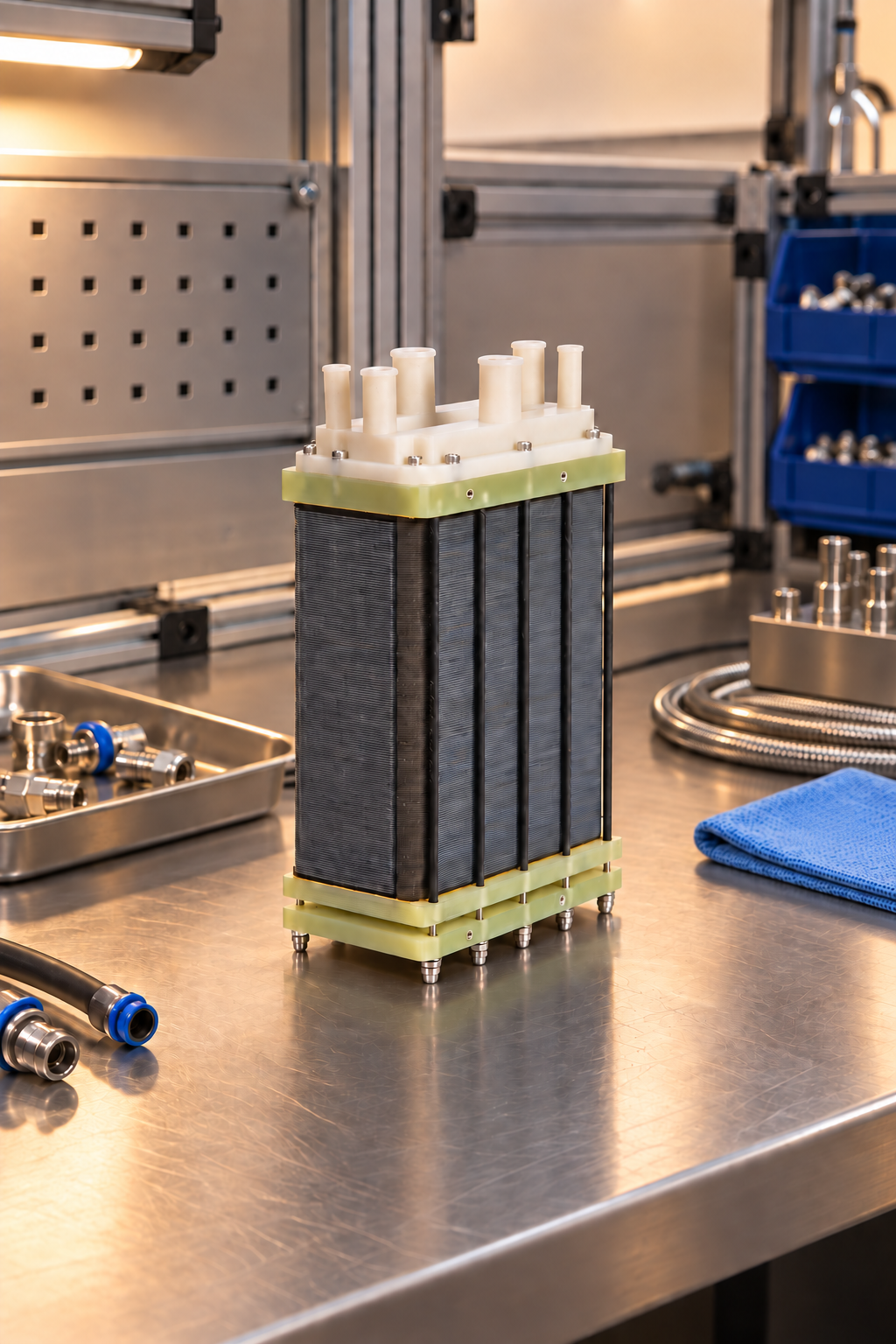
Impact Coatings AB is making waves with its expertise in physical vapor deposition (PVD) technology. They offer two main fuel cell coatings—Ceramic MAXPHASE™ and Premium FC—which are designed to protect stainless steel bipolar plates from corrosion and keep low contact resistance even in the tricky acidic and humid environment of a PEM fuel cell stack.
The PVD process involves using a vacuum chamber to either sputter or evaporate source materials onto metal plates. With a noble-metal-free ceramic layer, MAXPHASE™ provides robust protection, while Premium FC complies with Japan’s NEDO durability standards. Both coatings have proven capable of achieving lifetimes of over 5,000 hours on stainless steel 316L, leading to thinner plates, increased power density, and reduced system costs.
Strategic Positioning in China
Impact Coatings has strategically positioned itself within China’s hydrogen value chain through a local subsidiary based in Shanghai. Their INLINECOATER™ systems and Coating Service Center are now a significant player in the country’s annual production of coated metal plates for PEM fuel cells. Gaining official approval as a volume supplier to domestic fuel cell system and stack manufacturers has further strengthened their foothold in this growing market.
Recently, the company kicked off full one-shift operations at its Shanghai center again and has plans to roll out a second shift by the end of the year to keep up with surging customer demand. This uptick shows manufacturers moving into the execution phase as policy incentives pave the way for new hydrogen infrastructure and transport projects.
Broader Hydrogen Infrastructure Impact
The pilot program’s city-cluster model aims to rally resources around building integrated ecosystems. In each chosen region, stakeholders are ramping up efforts in:
- Building hydrogen production facilities (including green hydrogen from renewable electrolysis).
- Establishing compressed gas storage and transport networks.
- Setting up refueling stations for buses, trucks, and others using fuel cell technology.
- Developing large-scale plants for green ammonia, methanol, and hydrogen-based feedstocks.
- Pursuing hydrogen blending combustion projects in power generation and manufacturing.
By connecting resource-rich areas like Xinjiang and Inner Mongolia with manufacturing hubs along the coast, such as the Yangtze River Delta and the Greater Bay Area, these clusters are designed to boost economies of scale. This will help cut down on hydrogen transport costs and, ultimately, lower the total cost of ownership for fuel cell fleets.
Market and Policy Outlook
Right now, a whopping 97% of China’s hydrogen production is still grey hydrogen. However, the new policy signals are pushing for a quick shift towards green hydrogen production fueled by wind and solar. The performance-based rewards system incentivizes real operational outputs—think fuel cell vehicle kilometers, hydrogen consumption volumes, cost reductions, and safety compliance, rather than just adding capacity.
Analysts are buzzing about how this new pilot could set trends in global hydrogen energy news by showcasing large-scale multi-sector integration. If successful, it could lead to increasing investments in electrolyzer manufacturing, hydrogen storage technologies, and overall hydrogen infrastructure development, while also lowering the barriers for international suppliers and project developers aiming to get in on the action.
Looking Ahead
As local governments and industry players jump into action, mobilizing funding and technical resources, there’s a noticeable shift from subsidy-driven projects to commercially viable hydrogen ecosystems. For upstream materials and equipment providers like Impact Coatings AB, snagging early production slots and boosting capacity in China’s top hydrogen markets could be a game changer for their growth trajectory over the next decade.