SFC Energy Secures Record €42.7M DMFC Order for Ukraine
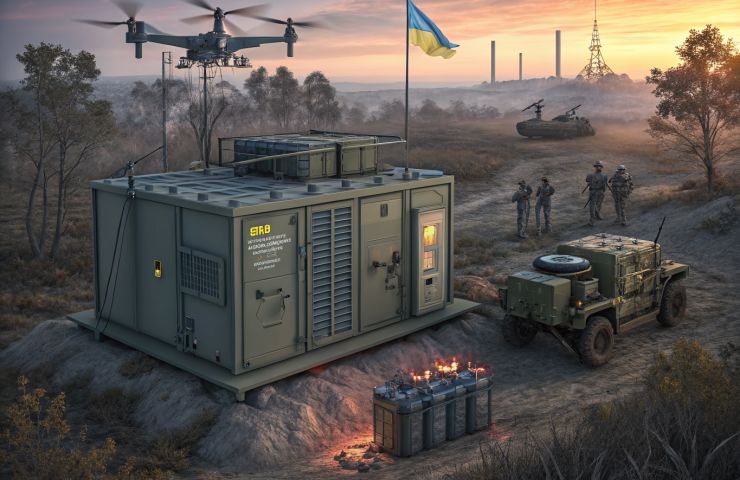
When diesel generators are too loud and bulky to keep your mission under the radar, what’s the alternative? Tiny cartridges of methanol are providing an answer on Ukraine’s frontlines. Recently, SFC Energy AG, the German pioneer in direct methanol and hydrogen fuel cells, secured its largest-ever contract—roughly €42.7 million—to deliver combat-proven hybrid fuel cell systems to Ukraine. Backed by the German Federal Government’s Enablement Initiative, this deal is set to redefine portable power for both military operations and civilian emergency support under fire.
Rather than dispatching convoys of diesel, these hybrid units blend direct methanol fuel cell (DMFC) stacks, lithium batteries, and power management electronics into a compact, off-grid package. Their signature feature is stealth: minimal heat and noise emissions let drones recharge, command posts stay online, and shelters maintain critical services without betraying positions. In a country where recurrent attacks have crippled the grid, reliable backup power can be the difference between life and death.
It’s remarkable to remember that just two decades ago, SFC Energy AG began as Smart Fuel Cell GmbH, founded by Dr. Jens Plassmann, Dr. Eugen Schiller and Dr. Peter Podesser near Munich. Their original focus was on clean backup for leisure applications like caravans and remote cabins. Over time, their EFOY DMFC modules gained traction in telecom towers, field installations and humanitarian relief. In 2022, SFC units were first sent to Ukraine under humanitarian aid, charging shelters and medical equipment—proof that small-scale fuel cells could stand up to crisis conditions. This latest order makes that journey from leisure to frontline official.
Under the Hood of Methanol Fuel Cells
So how do these DMFC systems actually work? At a basic level, a methanol-water mixture feeds the anode side of the cell, where a platinum catalyst triggers electrochemical oxidation. That process breaks down methanol (CH3OH) into protons, electrons, and carbon dioxide. Protons migrate through a polymer electrolyte membrane to the cathode, while electrons travel through an external circuit—generating electricity. There, they recombine with oxygen and protons to form water, completing the circuit. It’s a “cold combustion” reaction, with no moving parts, automatic start-up at low battery voltages, and operational temperatures between 50°C and 120°C.
Combine the fuel cell with a lithium battery, and you get a hybrid that handles steady-state loads with methanol power while the battery covers peaks. This arrangement slashes weight and volume compared to pure battery banks and cuts logistical strain: swap out a few methanol cartridges, and you’re back in action for days or weeks, depending on the use case.
Fuel Cells at the Heart of Resilience
Ukraine’s population has endured repeated blackouts ever since conflict erupted. While large-scale renewable projects and grid interconnectors promise long-term stability, front-line units and remote communities need immediate solutions. That’s where these portable DMFC hybrids come in. Since 2022, SFC’s EFOY fuel cells have quietly powered shelters, charging up to hundreds of phones daily and keeping vital comms alive. Scaling up deployments now means entire platoons can operate under battery-backed cover of darkness, while civilian shelters can maintain lights and heating without diesel fumes.
Relying on methanol rather than grid electricity or bottled hydrogen reduces fuel convoy risks and storage overhead. It also dovetails with the broader drive toward sustainable energy transitions, using a simple liquid fuel that’s easier to transport in austere environments than compressed hydrogen or bulk diesel.
Market Impact and Investor Confidence
From a financial standpoint, the effects are immediate. This deal lifts SFC’s full-year revenue guidance to €163–175 million and nudges projected adjusted EBITDA into the €29–34 million range. Shares reacted swiftly, jumping over 14% on the news. Earlier in the year, the company posted first-quarter sales of €34.1 million and an adjusted EBITDA of €6.15 million—figures that now look conservative against this record order.
Strategically, securing a defense contract of this scale marks a clear pivot for SFC. Born in 2000 in Brunnthal near Munich with a focus on leisure and telecom backup, the company has gradually steered its fuel cell technology into industrial and defense niches. Now, with battlefield-proven credentials, they’re well positioned to pursue further military and critical infrastructure contracts across NATO and allied nations.
Europe’s Energy and Security Nexus
Under the German Federal Government’s Enablement Initiative, this funding stream targets hybrid energy assets to shore up Ukraine’s operational resilience. Beyond weaponry, energy systems are becoming just as strategic as ammunition. By investing in fuel cell solutions rather than solely repairing grid nodes, Germany channels aid into decentralized power that’s less vulnerable to further strikes. It’s a new chapter in the intersection of hydrogen infrastructure and security policy.
Other European governments and institutions are watching closely. If these units deliver on their promise—silent, low-maintenance, and resilient power—future support programs could tilt toward more hydrogen energy news headlines rather than the usual gas- and diesel-based approaches.
Environmental and Operational Considerations
While methanol handling carries spill risks, the environmental benefits outweigh those of diesel. The only emissions are water and small amounts of CO₂, with negligible soot or NOₓ. Importantly, this technology sidesteps the need for fossil fuel logistics and embodies a zero-emission aspiration in harsh, off-grid contexts.
Operators on the ground will also appreciate the operational simplicity. No exhaust management, no rotating machinery, and minimal maintenance intervals make these hybrids ideal for deployed units with limited support infrastructure. That operational edge is exactly why defense planners are taking note of hydrogen fuel cell news as more than just a green marketing angle.
Scaling Up and Future Frontiers
The challenge now is scaling production. With manufacturing housed at its Brunnthal facility, SFC must replicate these systems at pace without compromising quality. Success in Ukraine could catalyze orders from other ministries of defense and critical infrastructure operators globally. The era of quiet, portable fuel cell power may be dawning.
Looking beyond methanol, SFC’s portfolio includes pure hydrogen fuel cells, hinting at a future where renewables-powered electrolysis might supply green hydrogen to forward bases. For now though, methanol-based hybrids offer a pragmatic bridge: they validate clean, silent power in combat conditions and pave the way for more ambitious hydrogen production methods down the line.
About the Company
SFC Energy AG (Frankfurt: F3C) develops and manufactures direct methanol and hydrogen fuel cell systems for off-grid and mobile hybrid power. Founded in 2000 near Munich, its EFOY series serves defense, telecom, industrial, and leisure markets worldwide.