PEMFC Flow Field Optimization Project Delivers 6.1% Power Density Gain
In a significant new project, an academic research team has partnered with advanced AI and simulation experts to revolutionize the cathode flow field design of Proton Exchange Membrane Fuel Cells (PEMFCs). Announced on August 13, 2025, this initiative is right in step with the global push for cleaner energy and aims at solving real-world problems of efficiency, water management, and manufacturability.
Simple but Powerful: AI Meets Fuel Cell Engineering
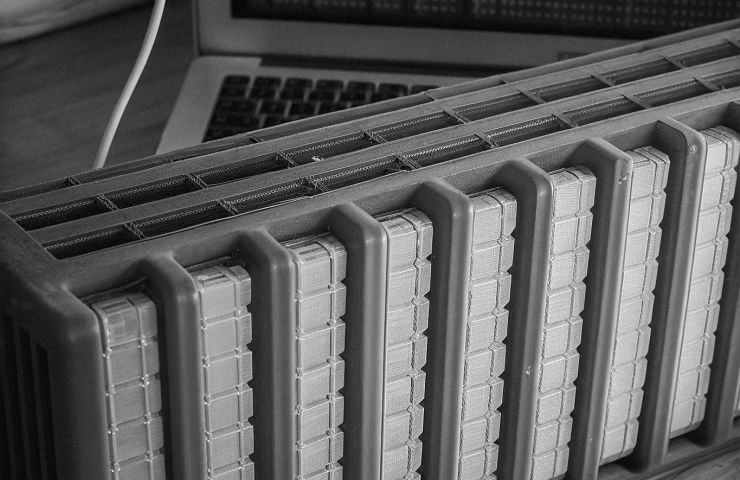
The idea is simple but powerful: strategically place and size blocks within the parallel channels of the cathode flow field to disturb flow, enhance oxygen distribution, and speed up liquid water drainage. To find the sweet spot between performance and practicality, the team tapped into Artificial Neural Networks (ANNs) and the Non-dominated Sorting Genetic Algorithm II (NSGA-II). These tools serve as surrogate models and optimization engines, respectively—fast-tracking the search for the best design without months of trial-and-error prototyping.
Impressive Gains in Efficiency and Uniformity
According to the peer-reviewed study published in ScienceDirect, the prototype design—called PAIB—delivered a 6.1% increase in maximum power density compared to the traditional baseline. Even more striking, the approach cut oxygen-deficient (anoxic) regions in the cell by 27.17%, directly reducing performance bottlenecks under high loads.
Further multi-objective optimization pushed the envelope: the net power density rose by another 4.6%, while the anoxic area shrank to just 12.19%. This balance of gains means PEMFC systems can run more efficiently and reliably—and at lower operating costs.
Solving Real-World Problems: Water Management and Manufacturability
Fuel cells often struggle with flooding or dry-out when liquid water isn’t managed well. Using a two-phase flow model based on the Volume of Fluid (VOF) method, the researchers simulated how water moves through the channels. The block-enhanced design helps scale droplets into larger slugs that break free more easily, reducing flood risks without adding excessive pump power. While any channel modification can raise pumping losses, this optimized layout keeps those parasitic losses in check—right in step with commercial realities.
Even better, the blocks are simple rectangular protrusions, easy to machine or mold with existing manufacturing setups. Made in local labs, made for the industry’s future, the design helps bridge the gap between advanced research and real-world deployment.
Impact on the Hydrogen Economy and Beyond
Boosting PEMFC reliability and power density is crucial for hydrogen vehicles, backup power, and portable electronics. By tapping into academic expertise and AI-driven tools, this project clears some of the last hurdles: mass transport limitations, water handling, and scaling up production. Industry insiders say these advances could accelerate the rollout of zero-emission trucks, off-grid power modules, and even aerospace applications.
Plus, the collaboration generates fresh local opportunities—from skilled engineering roles to high-tech manufacturing jobs. As companies scramble to decarbonize, they’ll need this kind of innovation right in step with market demands.
Looking Ahead
While the long-term mainstreaming of ANN + NSGA-II for fuel cell design is still emerging, this project demonstrates that AI can deliver tangible performance gains today. In the race to net-zero, every percentage point counts. With a 6.1% jump in power density and near-elimination of underperforming regions, this AI-aided flow field optimization project delivers a tangible win—proving that sometimes the best solutions are both elegantly simple and technologically cutting-edge.